EI World Women’s Conference: No gender justice without peace, democracy, and climate justice
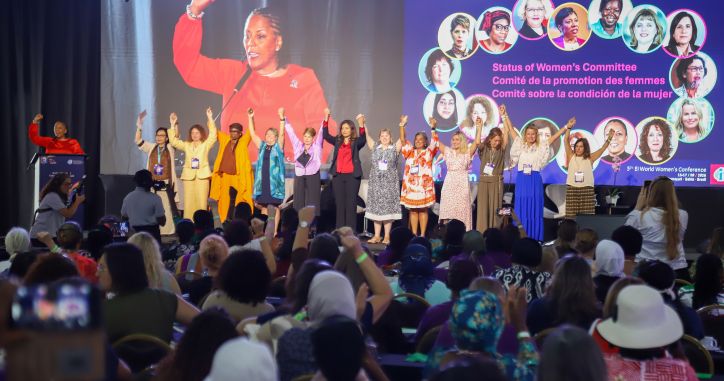
On the final day of the 5th EI World Women’s Conference, delegates discussed global challenges and their impact on women in education. Recognising that peace, democracy, and climate justice are preconditions for gender justice, women education unionists committed to join forces to advance a justice-focused agenda around the globe.
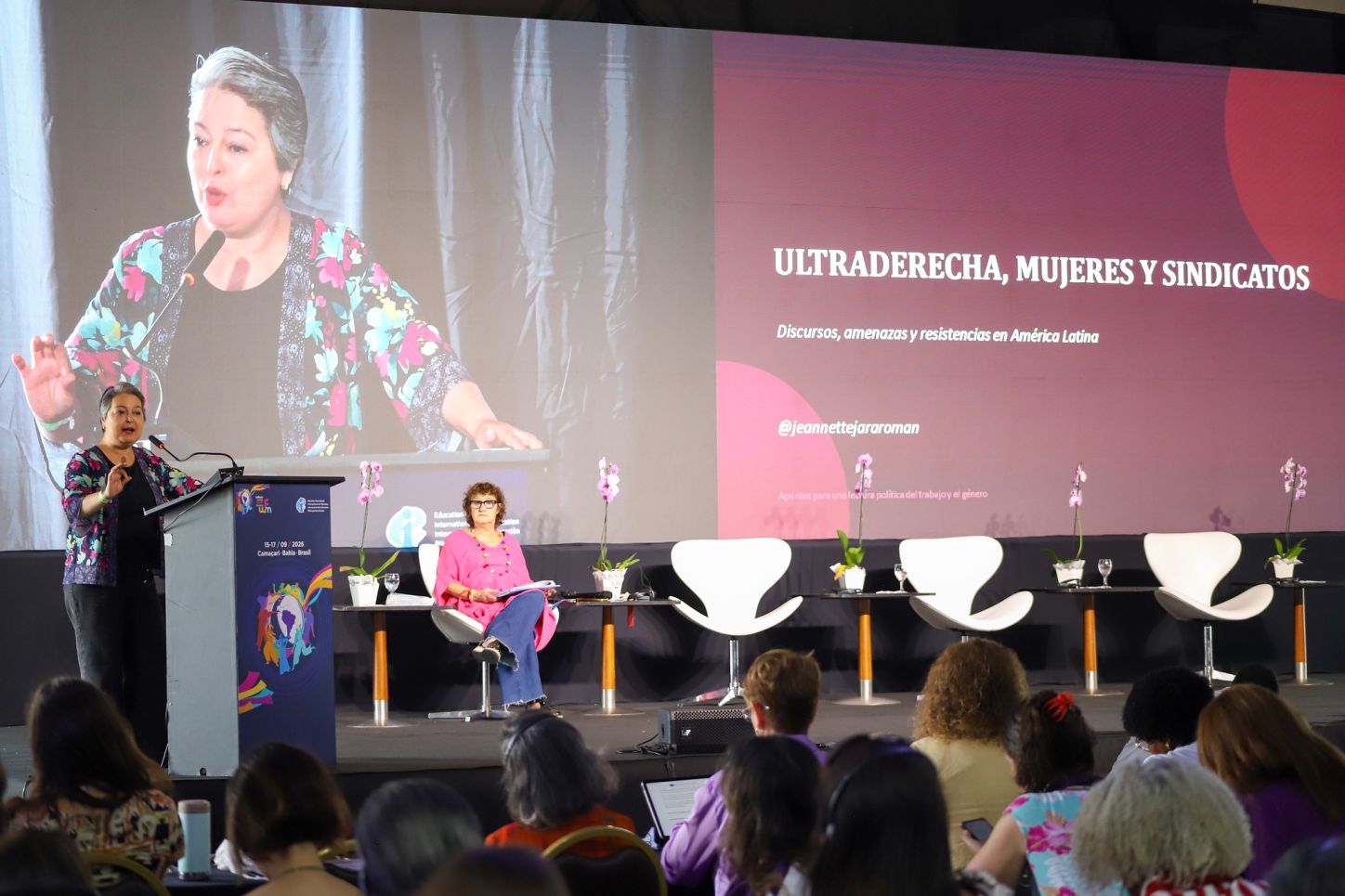
In an inspiring keynote address, Jeannette Jara, former Minister of Labor and Social Welfare of Chile and former presidential candidate, spoke about the surge in far-right forces across Latin America and the threat it poses to women, workers, and education. In a stirring speech, Jara encouraged unions to resist and rise up to defend women’s rights, worker’s rights and the fundamental right to education in the region and across the world.
Standing up for democracy
At a time when democracy is under pressure in many parts of the world, education unions are mobilising and organising to defend it. Union leaders from Argentina, the United States, Türkiye, and Germany shared some of the ways in which their unions are resisting authoritarianism and inspired colleagues to action.
Solidarity for peace
Participants also had the opportunity to go beyond the headlines and hear the testimonies of colleagues living through war and conflict in Palestine, Ukraine, Lebanon, and Colombia.
While the testimonies spoke of harrowing experiences and profound injustice, solidarity emerged as a powerful force for hope and peace. Despite the dire circumstances, with support from colleagues around the world, education unions in emergency contexts continue to mobilise and show up for their members and their students.
Mobilising and organising for climate justice
The climate crisis and the fight for women’s rights are interconnected emergencies. Conference participants examined how the climate crisis disproportionately affects women and marginalised communities, and how these impacts intersect with other forms of inequality and marginalisation. Panellists from the Caribbean, the Philippines, Morocco and Australia highlighted the impact on education communities and shared union strategies for climate action.
The Bahia Declaration
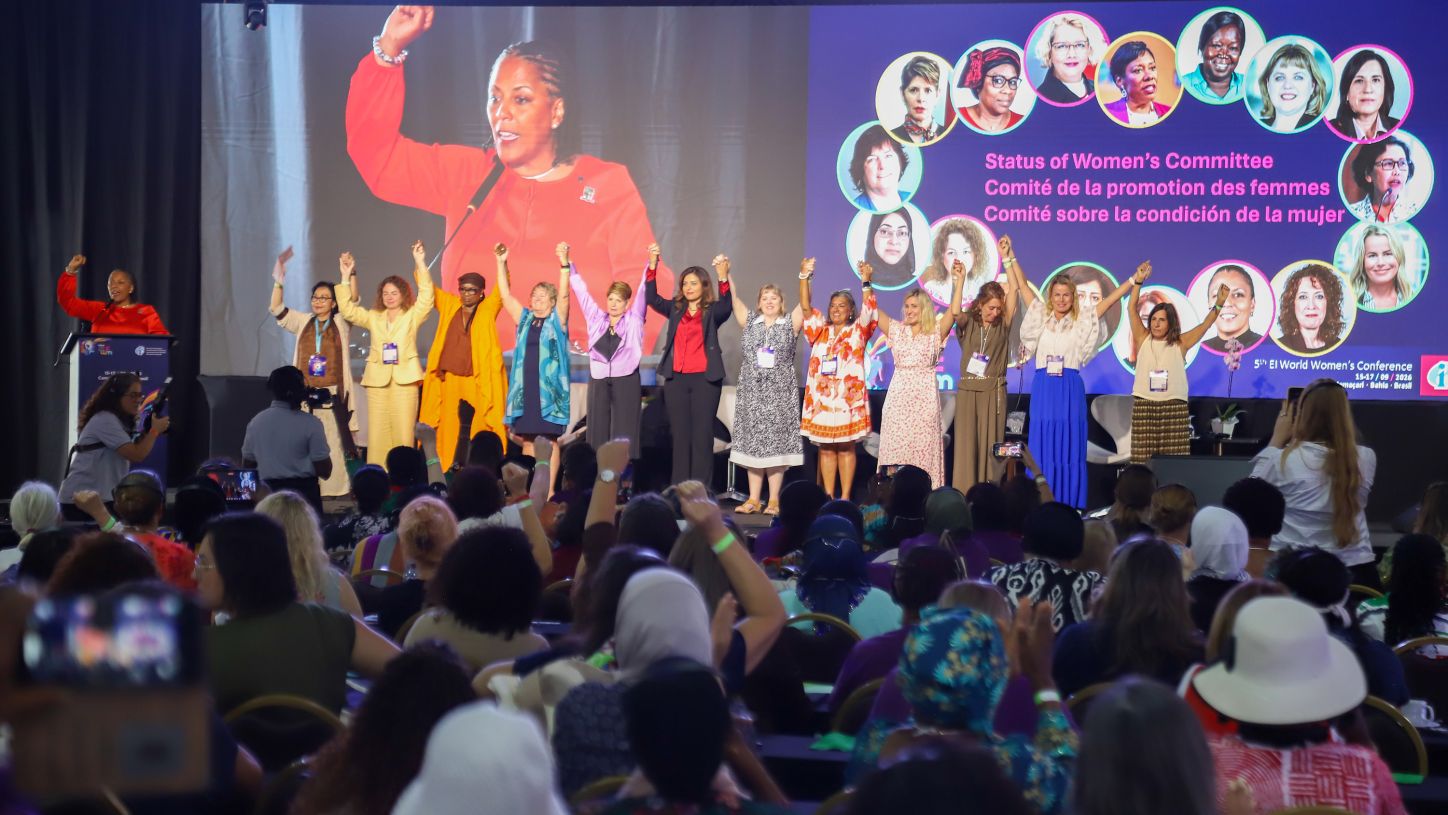
The 5th EI World Women’s Conference ended on a high note with the adoption of the Bahia Declaration: Rising united for gender justice.
“This Declaration aims to capture the spirit of the conference and our spirit as women teachers and education support personnel, trade unionists and sisters. It captures our main demands and, more importantly, it is a call to action. A call to our sisters at home, and a call to our brothers to step up their efforts. A call to governments to fulfil their responsibility towards us, the women who power education around the world. Because it is governments that need to ensure our human and trade union rights. Governments that need to fully fund our public education systems”, stated Marième Sakho Dansokho, EI Vice-President.
The Declaration will support and amplify EI’s work for gender justice over the coming years, together with the new EI Gender Equality Action Plan 2026-2029.
The Declaration was read out by the women of Education International’s Executive Board and enthusiastically adopted by the Conference by acclamation.