Haiti: As the new school year begins, trade unions call for action on public education
Following the start of the new school year on 7 September 2026 in Haiti, education trade unions are calling for immediate negotiations with the authorities. For the Platform of Haitian Teachers’ Unions (PSEH), a smooth return to school depends on concrete responses to the demands of education staff, the rehabilitation of public school buildings, and increased investment in education overall. Union leaders also warn of the consequences of the ongoing insecurity and the persistent lack of social dialogue.
A return to school that cannot be limited to the reopening of classrooms
Haiti’s teachers are still awaiting a response to their demands regarding working conditions, the regularisation of their status, social protection, pay, safety, and the state of public education establishments. This accumulation of challenges is impacting their readiness for the new school year.
On 25 August, the PSEH, which groups Education International affiliates the UNNOEH, CNEH and FENATEC, alongside the National League of Haitian Teachers (LINEH), the Network of Teachers in Haiti (REEH), and the Teachers in Action Initiative Group (GIEL), wrote to National Education and Vocational Training Minister, Vigenet Demero.
In its letter, the platform insists on “the need for dialogue and negotiations to be launched regarding the legitimate demands presented by the sector, so that concrete and sustainable solutions can be found, in the interest of teachers, pupils, and the education system as a whole”.
The PSEH stresses the urgency of such action “given the palpable frustration in the education sector, with many education workers seeing their demands and concerns left unanswered”.
For the trade unions, it is not enough simply to announce the start date for the new school year and open the doors to classrooms. The conditions need to be put in place to enable staff to teach and pupils to learn in safe and functional public education establishments.
The unions’ demands include a pay rise, a transport allowance, better benefits, recognition of professional experience, and the introduction of an insurance scheme. They are also calling for teachers to be effectively deployed in classrooms and for the situation of staff displaced by insecurity to be taken into account.
“What are we going to say to the teachers, to our members?”
While Kensone Délice, General Coordinator of the UNNOEH, acknowledges that the Minister can be approached, he stresses that this availability has not yet been translated into a genuine negotiation process:
“The Minister isn’t unapproachable; we can talk to him, he listens and he hears us. We’re going to give him one last chance and ask for one final meeting to try to establish a formal dialogue regarding our demands. He has all the information at hand; he is fully aware of what we want.”
According to the UNNOEH, some of the demands could be met immediately, while others will take more time to resolve.
“I think some of these demands could already be addressed. We know that some of them are long-term demands. He could at least appoint some teachers,” insists the union leader.
The UNNOEH is also calling for the implementation of special status for teaching staff, which was the subject of a memorandum of understanding in 2014. For the union’s General Coordinator, the authorities already have a basis on which to act: “The Minister could at least start by implementing certain provisions. This document has been completely set aside, despite its importance. The Minister and the government are showing a lack of will.”
Repair and availability of school buildings
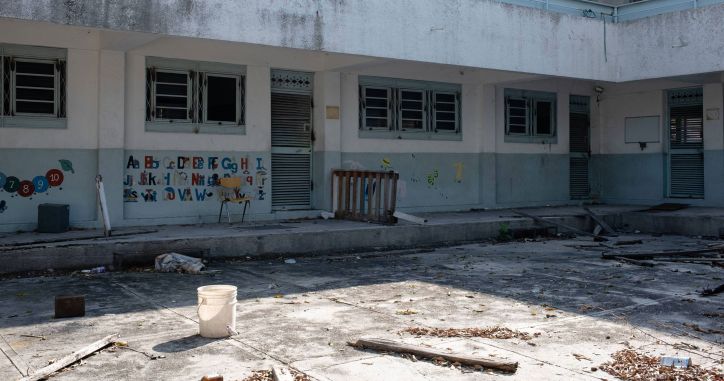
The state of school infrastructures is another major obstacle to a return to normal school life. Some public establishments require major repairs, while others are still sheltering people who have been forced to flee their homes because of the insecurity.
As Délice warns, “public schools need to be rehabilitated; many are currently occupied by displaced people. They need to be vacated to ensure a smooth return to school in September. Other premises have been vacated, but schools do not seem to be a priority.”
The unions also point out that some establishments lack sufficient space and that several schools are grouped together in premises that prevent them from carrying out educational activities as normal.
A worrying security situation
The security situation is also having a direct impact on staff.
As Lourdes Edith Joseph, special adviser to the CNEH’s executive, points out:
“The start of the 2026-2027 school year unfolded against a backdrop of an economic and security crisis. Kidnappings have increased in the metropolitan area, and parents fear for their children’s safety. A week after the start of term, classrooms are almost empty and absenteeism is very high. Nothing has been done to free up the schools being used as shelters for displaced people, victims of violence perpetrated by armed groups.”
The UNNOEH reports that national roads remain under the control of armed groups, particularly in the Ouest and Artibonite departments, resulting in the abduction of teachers.
“The situation is still very difficult. So far, there is no sign of the security forces getting the situation under control. The armed groups are still largely in control,” explains Délice. “There are still roadblocks. Drivers have to pay if they want to get through. And there has been an upsurge in the number of kidnappings.”
For the trade union movement, this lack of security cannot be separated from the start of the new school year. It determines whether pupils and staff can return to school and work without putting their lives at risk.
The EI-affiliated National Federation of Education Trade Unions (FENASE), of which the LINEH and the REEH are members, shares this concern regarding the circumstances in which the school year is beginning.
“The situation in the country remains unstable,” admits the union federation’s President, Yvel Admettre. Although he reports a slight improvement in the Port-au-Prince area, he underlines that the trend is not good in Artibonite. He also points out that a town in the Centre department is occupied by armed groups.
The union leader nonetheless refuses to lose heart: “We remain hopeful that things will one day improve”.
For the FENASE, one of the most urgent needs is to regularise the staff members who are already teaching without the appropriate administrative status.
“Our focus is to ensure the regularisation of the teachers in our classrooms,” says Admettre.
He also criticises the circumstances in which certain appointments are made: “Appointments continue to be made on a clientelist basis, through links with politicians.”
The implementation of special status is the federation’s second key priority. “We’re going to fight for this. We want to provide teachers with greater incentives to remain in the system”, explains the FENASE leader.
Social protection also needs strengthening. Referring to the insurance scheme for teaching staff, Admettre observes: “The scheme used to be acceptable, but it has deteriorated over the last ten years or so.”
Trade unions excluded from preparations for the start of the new school year
“Despite the government’s announcements, the situation remains very precarious for parents and teachers. Parents are waiting for the financial assistance promised by the state to prepare for their children’s return to school. Funds have not yet been transferred to public education establishments, and teachers have not yet been paid their salaries for the month of August. The promise of social dialogue has amounted to nothing, with no response received to the letter the platform sent to the Minister for Education,” explained Joseph.
FENASE also feels that the lack of consultation with trade unions is undermining the start of the new school year.
“We don’t really have any dealings with the Minister. We had a general meeting when he arrived,” says Admettre, pointing out that the Minister had promised planning meetings.
Yet, he explains, there were no such exchanges as part of the preparations for the new school year: “The platform was not invited. Not one union was invited to the preparatory meetings for the return to school.”
He nevertheless assures us that the organisations will continue to persevere: “We will, in any case, be writing to the Minister to try to clarify certain matters.”
These statements illustrate the significance of the request made by the PSEH to the Ministry. The education community cannot be excluded from decisions that directly affect its work, its safety, and the future of public education.
Go Public! Fund Education: making the start of the new school year a time for action
This mobilisation by Haitian trade unions also ties in with Education International’s global Go Public: Fund Education campaign. Haiti’s education unions joined the campaign in 2025, to call for greater investment in public education and the teaching profession.
The UNNOEH has completed the first phase of the campaign and plans to launch the second phase in September. For Kensone Délice, the start of the new school year is “a very favourable time for trade union activities” and an opportunity to put public education at the heart of the national debate.
Communication will be one of the key drivers in the new phase: “We’ll start with communication. Now is the time to speak up about the issues.”
The campaign will, for instance, call for an education budget that meets actual needs, with further budget discussions expected in October. It will also aim to raise awareness among education staff and politicians of the urgent need to strengthen the public education system.
For Délice, the imbalance between public and private education makes this campaign essential: “Eighty-three per cent of school places are in the hands of the private sector. New private schools are opening every day. We need to build more public schools.”
No successful return to school without education staff
The PSEH, CNEH, UNNOEH, and FENASE agree on the fundamental issue: the start of the new school year cannot proceed smoothly without negotiations, without concrete measures in support of staff, and without safe and dignified public schools.
The regularisation of teachers, improved pay and social security, the fulfilment of commitments already made, the rehabilitation and repair of school buildings, and the safety of education communities are not secondary demands. They are prerequisites for effectively exercising the right to education.
With Go Public! Fund Education, Haitian trade unions are taking this battle beyond the return to school. They are calling for a clear political choice to invest sustainably in public education, to respect the collective voice of education staff, and to recognise that there can be no quality public education without teaching staff who are supported and valued.