Haiti: Education unions stand firm in the face of insecurity and political instability
Despite the prolonged political crisis, endemic violence, and growing economic insecurity, education unions in Haiti are continuing their campaign to defend public education and teachers’ rights. Meeting within the framework of the Go Public! Fund Education campaign, trade union leaders present a clear picture of the situation and reiterate their determination to have the government honour its commitments.
A never-ending political transition
The leaders of the three Haitian unions involved in the Go Public! Fund Education campaign – Lourdes Edith Joseph, Acting General Secretary of the CNEH (National Confederation of Haitian Educators), Hubermane Clermont, General Secretary of FENATEC (National Federation of Education and Culture Workers), and Kensone Delice, coordinator of UNNOEH (National Union of Teachers and Education Workers of Haiti) – spoke of a never-ending political transition. In April 2024, an agreement had provided for the establishment of a presidential council and a consensus government, with elections to be announced before February 2026. This commitment has not yet been honoured because of the lack of security and political conditions needed to hold elections.
“Haiti is in the midst of an endless transition,” the trade union leaders summarised, underlining that the country has been without a parliament since 2020 and that public confidence in the government’s genuine willingness to hold elections is dangerously eroding.
Gang violence taking a heavy toll on education
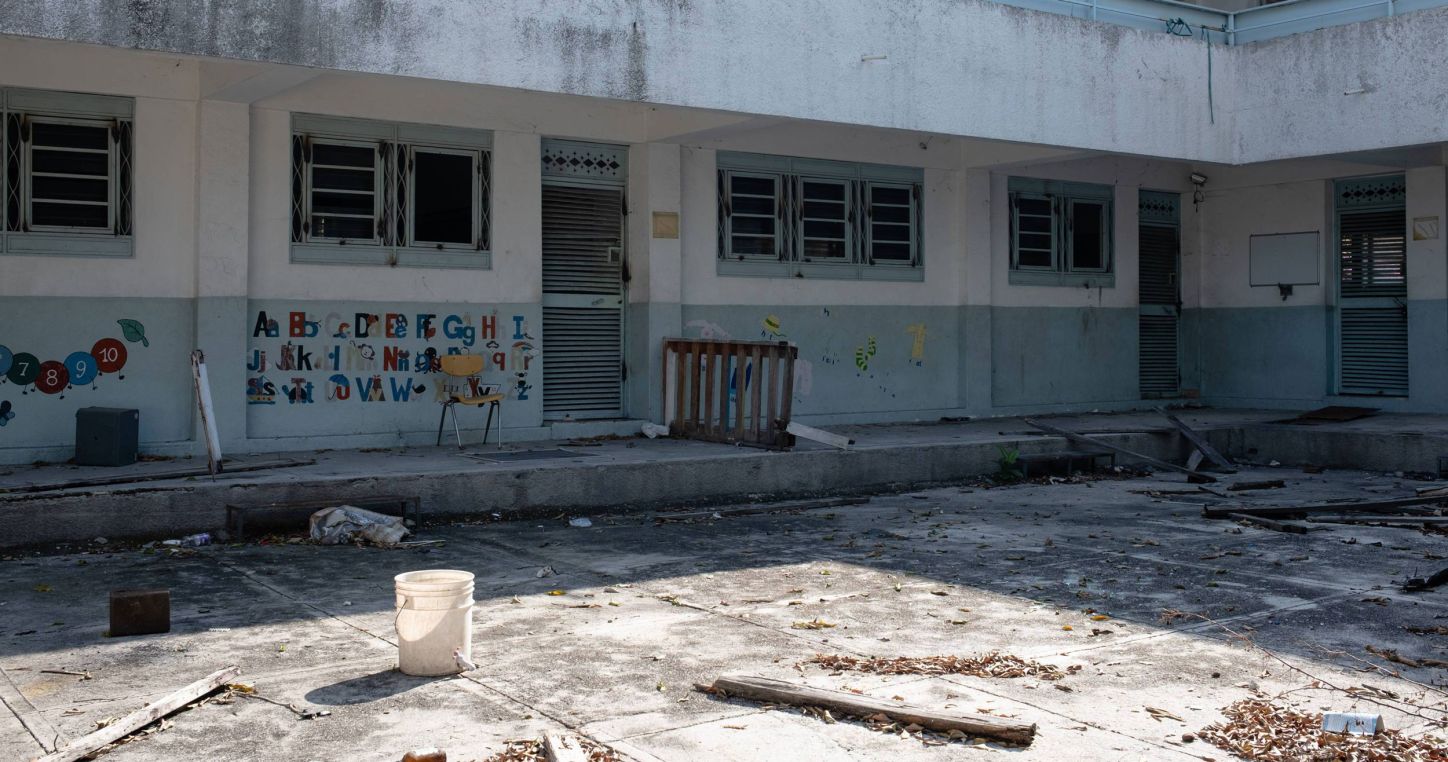
The security situation continues to deteriorate. Most of Port-au-Prince remains under the control of armed groups, while massacres and clashes continue in various regions. This violence directly impacts teachers and students.
Some teachers have to stay in the capital all week to be able to teach their classes, due to the illegal roadblocks and tolls. Others simply can no longer afford to travel to their schools every day. Pupils are dropping out of education in large numbers in the areas controlled by gangs, where schools have been relocated or closed.
Pay agreement, still a dead letter
Against this backdrop, the education sector remains in turmoil. Following large-scale mobilisations, a memorandum of understanding was signed with the government in January 2024, setting out provisions such as a pay rise and the alignment of primary school teachers’ salaries with those of secondary school teachers.
To date, virtually no action has been taken to implement this agreement, the unions explain. Only a one-off bonus has been paid. The recent appointment of a new Education Minister has not provided any greater clarity regarding the government’s intentions.
The mystery of a budget on the rise, yet invisible on the ground
The unions also denounce the lack of transparency surrounding the education budget. A 50% increase was announced over a year ago, yet no tangible impact has been felt by teaching staff or in classrooms.
In the absence of any meaningful dialogue with the Ministry, the unions suspect that the central administration is benefiting from the funds rather than using them to improve teaching conditions. Influencing how the budget is allocated internally has now become one of the unions’ strategic priorities.
Go Public! Fund Education: a campaign that unites and mobilises
Despite the climate of insecurity, the trade unions launched the Go Public! Fund Education campaign in September 2025. Developed collectively, the campaign has been built on alliances with other civil society organisations and unions from other sectors.
The communication strategy is strongly focused on digital platforms and social media, with short videos, banners and flyers widely shared. “Extensive social media use means that public opinion can now be reached more effectively than through traditional media,” the union leaders note.
A campaign with tangible results
The campaign’s impact has been very positive. Teachers from both public and private schools applaud the relevance of the message, with its focus on education funding. The unions noted that politicians are more receptive towards them and that they are receiving better media coverage.
Above all, the campaign has helped improve the image of the education trade union movement, which is no longer seen as self-serving but as championing a cause that is in the public interest. “Many now realise that we are fighting a national battle for the future of our country,” the union leaders emphasise.
Major challenges still ahead
The challenges nonetheless remain substantial. The unions are preparing to resume talks with the education minister, to press for better use to be made of the budget and for the introduction of the teachers’ status set out in the 2014 decree, which has not been implemented.
In a country marked by instability and violence, education unions continue to play a vital role in championing the right to quality public education that is accessible to all, a prerequisite for rebuilding Haiti on solid democratic and social foundations.