ISTP 2026 in Tallinn: Supporting teachers to build the education systems of the future
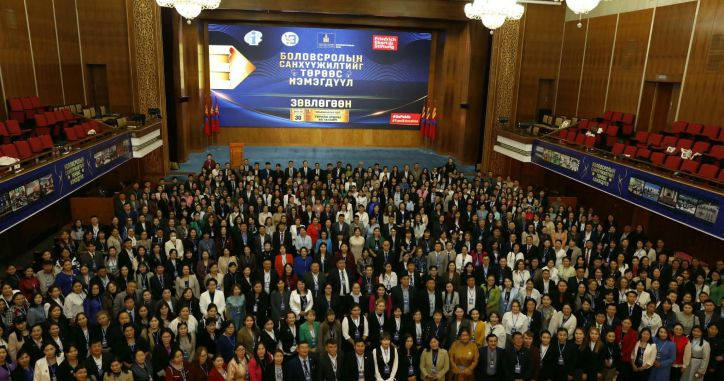
The 16th edition of the International Summit on the Teaching Profession (ISTP) kicks off today in Tallinn, Estonia, bringing together education ministers and education union leaders from 20 countries and territories.
The Summit provides a unique global forum for genuine dialogue between governments and the teaching profession and their unions on how to strengthen public education systems and ensure quality education for all.
ISTP 2026 is co-hosted by the Government of Estonia, the Estonian Educational Personnel Union, Education International (EI), and the Organisation for Economic Co-operation and Development (OECD).
At a time of profound uncertainty, the ISTP will focus on the role teachers play in shaping future-ready education systems.
“How do we prepare teachers for a future that is not yet written? We cannot train teachers for a single, fixed version of the future. What we can do is invest in their capacity to adapt, to think critically, to collaborate, and to exercise professional judgement in the face of the unknown”, stated David Edwards, Education International General Secretary.
Reemo Voltri, Chair of the Estonian Education Personnel Union, an Education International affiliate, said: “Hosting the International Summit on the Teaching Profession in Tallinn is an important moment for Estonia and for the teaching profession globally. Teachers play a crucial role in shaping our societies, and their voices must be part of decisions about education policy. As a country that strongly believes in education, we hope this summit will also encourage concrete decisions that support the teaching profession in Estonia.”
The future of the teaching profession
During the Summit, education union leaders and ministers of education will explore three interconnected themes at the heart of the teaching profession’s future.
ISTP participants will examine the evolving teacher profession, including the changing demands placed on teachers, the persistent shortages that weaken education systems, the imperative to ensure every child has a trained and qualified teacher, and the need to safeguard the irreplaceable teacher-student relationship.
The Summit will explore the professional autonomy of educators and the conditions required for teachers to exercise genuine professional judgement, the accountability systems that either support or constrain them, and the collaborative professional communities that sustain high-quality practice.
The opportunities and risks of artificial intelligence and educational technology will also be analysed, focusing on how these tools can be governed in ways that empower teachers rather than sideline them, and that protect students rather than expose them to harm.
“Whatever changes the future brings, one thing remains certain: teachers’ ability to meet those challenges will rely on their ability to count on fully funded, well-designed, and enabling education systems”, Edwards noted.
Implementing the United Nations Recommendations for a strong and resilient teaching profession remains a priority in order to end the global teacher shortage that is putting the right to education at risk.
“Decent salaries, secure employment, manageable workloads, quality initial training and continuous professional development, as well as the freedom and trust to exercise professional autonomy, and meaningful participation in the decisions that shape their work are not luxuries to be granted in good times and withdrawn in hard ones. They are the foundations upon which every ambition we hold for education must rest”, Edwards stressed.
The livestream of the opening session is available below.
For further background, Education International’s policy briefing for ISTP 2026 provides analysis and recommendations.