Eswatini: Union campaign strengthens social dialogue while exposing chronic underinvestment in education
The Swaziland National Association of Teachers (SNAT) Secretary General Lot Vilakati acknowledged that years of campaigning for increased public investment in education are beginning to yield results, with education financing now receiving greater attention from government officials and policymakers. However, the union warns that severe funding gaps, widespread precarious employment and shortages of early childhood education teachers continue to undermine the right to quality education in Eswatini.
With other education unions, SNAT strongly reaffirmed that quality public education begins with quality funding during the Education International (EI) Southern Africa Sub-Regional Workshop on the Go Public! Fund Education campaign, held in Johannesburg, South Africa, from July 23rd-24th, 2026.
For Eswatini, SNAT presented a country report of the implementation of the Go Public! campaign during this event convened by EI Africa and hosted by the South African Democratic Teachers Union (SADTU) and the National Professional Teachers' Organisation of South Africa (NAPTOSA).
According to the union, education workers account for roughly half of Eswatini’s 45,000 civil servants, and 95 per cent of those education workers are teachers. The union estimates that there are nearly 18,000 active teachers in the country, with around 4,000 employed on temporary contracts. Many of these contract educators are young professionals, while others have worked under repeatedly renewed contracts for more than 15 years despite being fully qualified teachers.
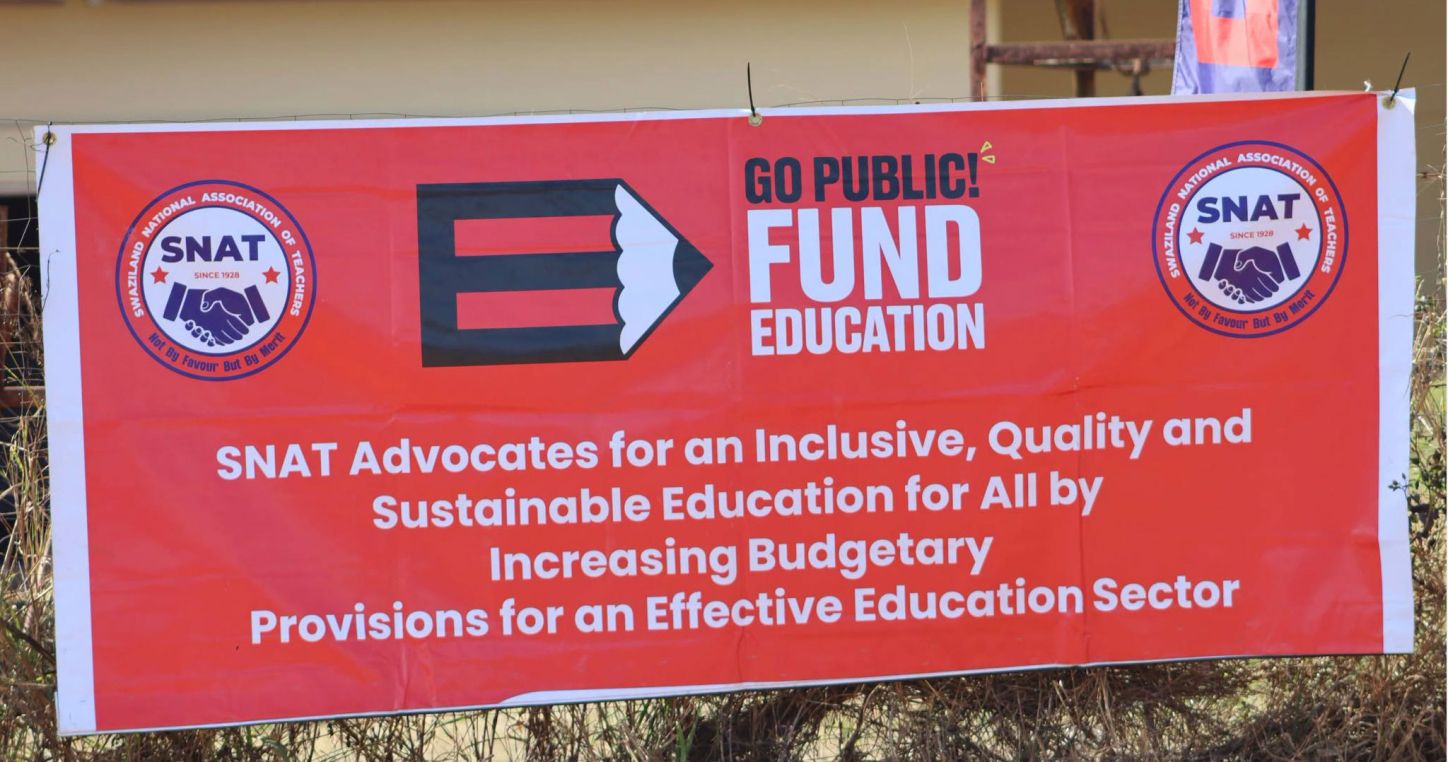
Free education needs adequate financing
While Eswatini has provided free primary education since 2010, SNAT stressed that the resources allocated to schools remain insufficient to meet learners’ needs. The union notes that, despite progress in raising awareness about education financing over the past twelve years, education and health continue to receive a smaller share of public spending than required.
“Our challenges are still the national budget that is still skewed as the big chunk goes to other ministries compared to funds allocated education and health,” said Vilakati. He added that advocating for increased investment remains difficult because of “the political climate and the system of government.”
The union also reported that its advocacy helped draw attention to attempts to privatise a public school, with education officials increasingly engaging in debates around the future of public education.

Early childhood education remains critically understaffed
A central focus of SNAT’s recent advocacy has been the full implementation of Early Childhood Care, Development and Education (ECCDE) across the country’s approximately 700 primary schools. The union is calling for every school to have qualified and permanently employed ECCDE teachers.
However, SNAT says the government has created only 30 teaching posts, well short of the approximately 600 teachers needed to ensure full implementation. As a result, hundreds of qualified educators continue to work as volunteers.
“The government just gave us only 30 posts against the 600 teachers needed,” the SNAT leader explained, noting that this leaves many trained teachers without permanent employment opportunities.
Campaign opens doors for dialogue
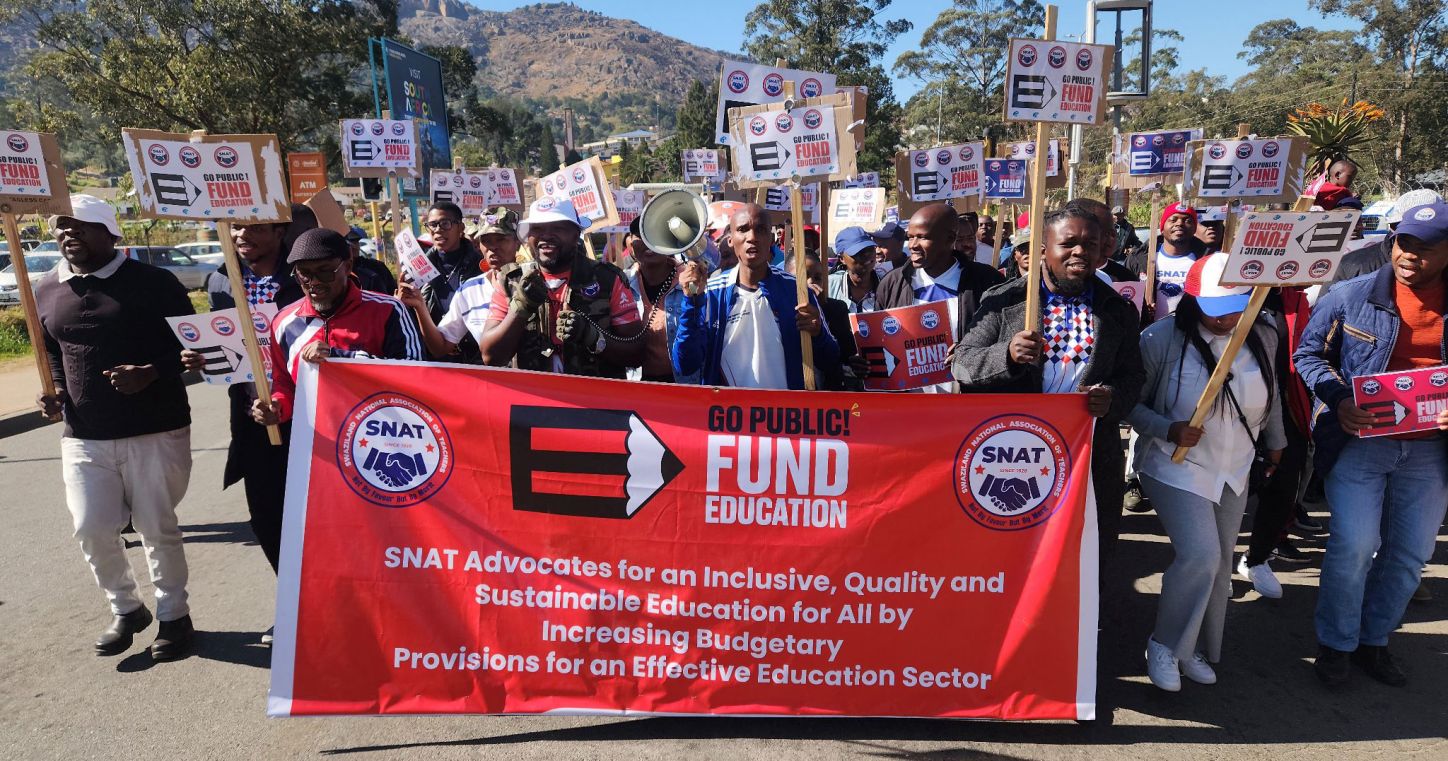
The union also reported that its sustained campaigning has created new opportunities for engagement with education authorities. SNAT organised peaceful marches and delivered petitions to ministry offices across the country, pressing for greater investment in education and improved working conditions for educators.
For the union, these actions helped change perceptions of its advocacy and led to more substantive discussions with government representatives. Recent bilateral talks focused heavily on education financing and resulted in plans for joint visits to schools. The union has also scheduled follow-up meetings to monitor progress on the demands contained in its petitions.
“The campaign has opened doors for social dialogue on our part as our marches were peaceful and it changed their mindset,” Vilakati acknowledged. “We have recently held a bilateral where the issue of education financing was greatly discussed.”
The union further noted that the Minister of Education has publicly advocated for increased education financing in parliament, reflecting growing recognition of the sector’s funding challenges.
Union growth driven by young educators
SNAT further reported that the campaign has also contributed to membership growth. Young teachers, many of whom are directly affected by insecure employment and underfunding, increasingly see the union as a vehicle to advance their professional and economic interests.
“We are experiencing trade union growth because of the campaign,” Lot Vilakati stated. “The new teachers who are mostly affected by underinvestment in education discovered that the campaign also resonates well with them.”
As educators in Eswatini continue to advocate for sustainable public financing, secure employment and quality early childhood education, SNAT continues its campaign efforts, underlining that genuine investment in public education is essential to ensuring every learner has access to quality education and every teacher enjoys decent work and professional dignity.
Renewed global solidarity with SNAT leadership
Education International further reaffirms its unwavering solidarity with SNAT, its leadership and members, following arrest and harassment of education union leaders by the authorities in Eswatini.
It urges the latter to immediately halt the persecution of SNAT leaders, guarantee their safety, and respect their fundamental human and trade union rights.