5th World Women’s Conference: Gender justice at the heart of the fight for educators’ rights
The education workforce is dominated by women in many parts of the world. In light of this fact, participants at the 5th Education International World Women’s Conference explored the complex gender dimension of the professional issues educators face, sharing insights and charting the way forward for women in education.
Understanding the global teacher shortage through a gender lens
The world needs 50 million more teachers by 2030 to ensure every child’s fundamental right to education. Low salaries compared to comparable professions, poor working conditions, excessive workloads and emotional labour, and a lack of respect from society are fueling the workforce crisis in education. They are impacting a profoundly feminised profession, driving many experienced teachers out of education and discouraging others from joining.
On the second day of the 5th EI World Women’s Conference, Wangari Kinoti, Global lead for women's rights and feminist alternatives at ActionAid International, delivered an insightful keynote speech on understanding the teacher shortage through a gender lens.
Kinoti stressed that women educators are not only workers in an underfunded system, but people who are actively subsidising that system with their labour, with their time, with their emotional reserves, and oftentimes, with their own money.
In the spotlight: Health and well-being, the rise of misogyny in classrooms, and the undervaluing of early childhood education
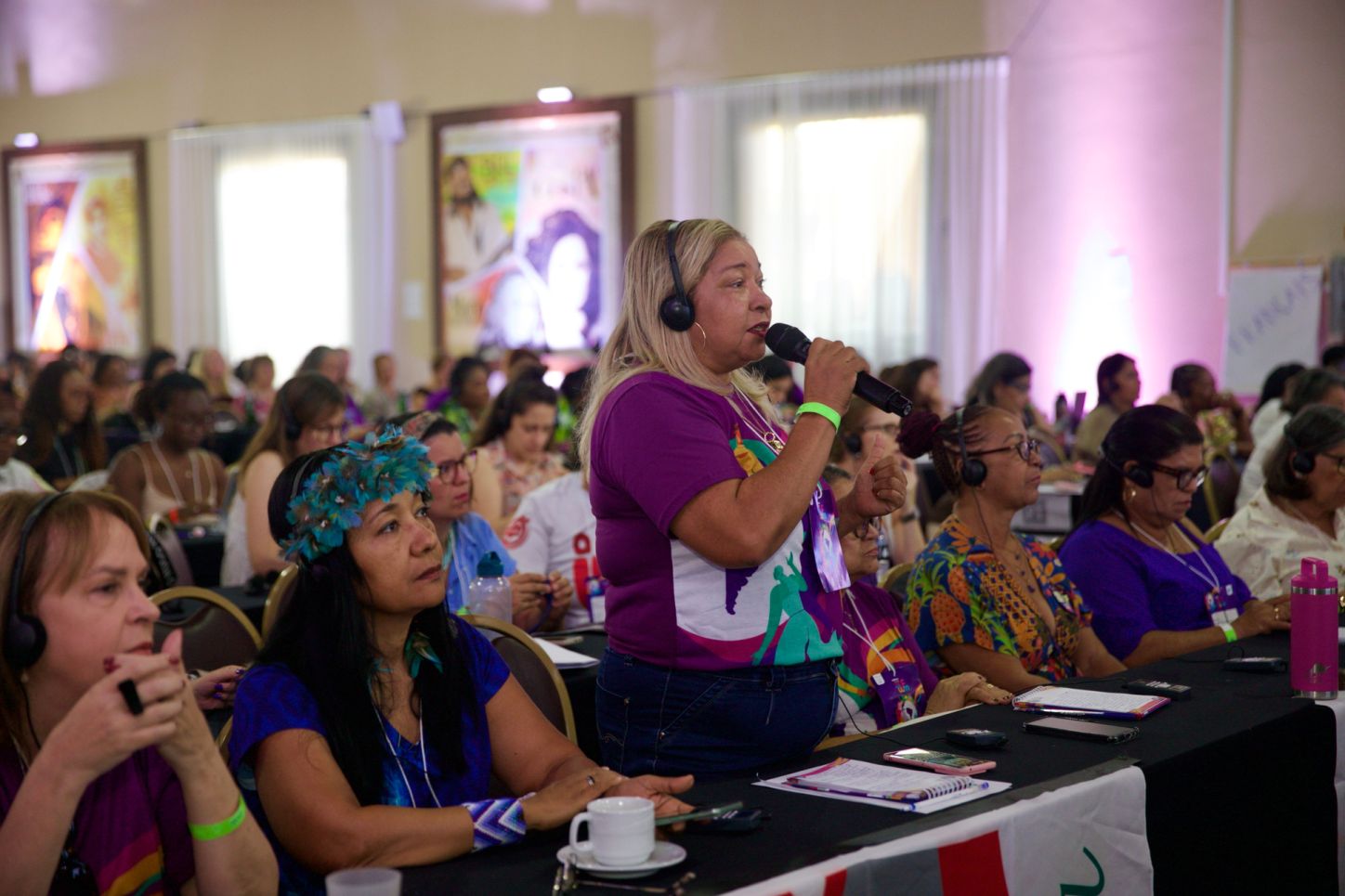
Subsequent breakout sessions further explored specific issues that affect women in education.
Participants discussed challenges around health and well-being at work, focusing on issues that affect women in all their diversity, such as mental health, work–life balance, and gender-specific health needs across different life stages and circumstances, including pregnancy and postpartum recovery, or menopause. Drawing upon available evidence, the session also highlighted strategies to promote women’s health and well-being.
The rise of misogyny among young boys and young men, a trend that can be observed across contexts, was also in the spotlight. Participants shared how these attitudes affect teaching and learning, classroom dynamics, and the wellbeing and safety of girls and women. They also reflected on how a predominantly feminised profession can be supported in confronting and challenging misogyny and discussed the role of unions in shaping policy interventions and promoting safe and inclusive learning and working environments.
In addition, participants tackled the structural undervaluation and underfunding of early childhood education. They examined the persistent gender norms connected to care work, motherhood, and women’s unpaid labour, and their impact on the status, recognition, and working conditions of teachers and education support personnel in early childhood education. Union approaches and strategies for defending and improving the rights, status, and conditions of colleagues in this highly feminised sector were proposed.
Practical tools and capacity building
A new toolkit developed by Education International in partnership with the Sasakawa Leprosy Initiative was launched at the Conference. The toolkit is designed to help educators and education unions foster inclusive learning and working environments while addressing stigma and discrimination related to Hansen's disease (leprosy) and other health-related disabilities. The toolkit includes dedicated modules on ending stigma and discrimination against women and on the role of education support personnel in advancing inclusive education.
Capacity building sessions gave participants the opportunity to learn about practical tools and strategies for leading with care and well-being at the centre, organising against violence and harassment, and advancing gender equality through collective bargaining.
The Future of Our Power: Democracy, Women’s Participation, and Trade Union Freedom
The second day at the 5th EI World Women’s Conference ended on a high note with an insightful and inspiring conversation between women education union leaders from Latin America on the future of unionism.
The panel proposed a collective reflection on the future of the education trade union movement and, particularly, on the fundamental role that women play in shaping it. The discussion was centered on women’s participation, their leadership experiences, the care and emotional burdens they face, the stigmas and patriarchal practices they encounter, as well as the conditions needed for more women to remain in trade unions and take on leadership roles.
In this context, the panel discussed the role of the RED de Trabajadoras (Latin America Women Workers’ Network) as a tool for strengthening more democratic and inclusive trade unions and for building a trade union movement capable of engaging younger generations. The panel concluded by looking towards the future, reflecting on what the trade union movement should look like and what transformations are needed to build it, while also considering what we want to preserve from our pedagogical practice, regardless of the transformations the education sector may undergo.