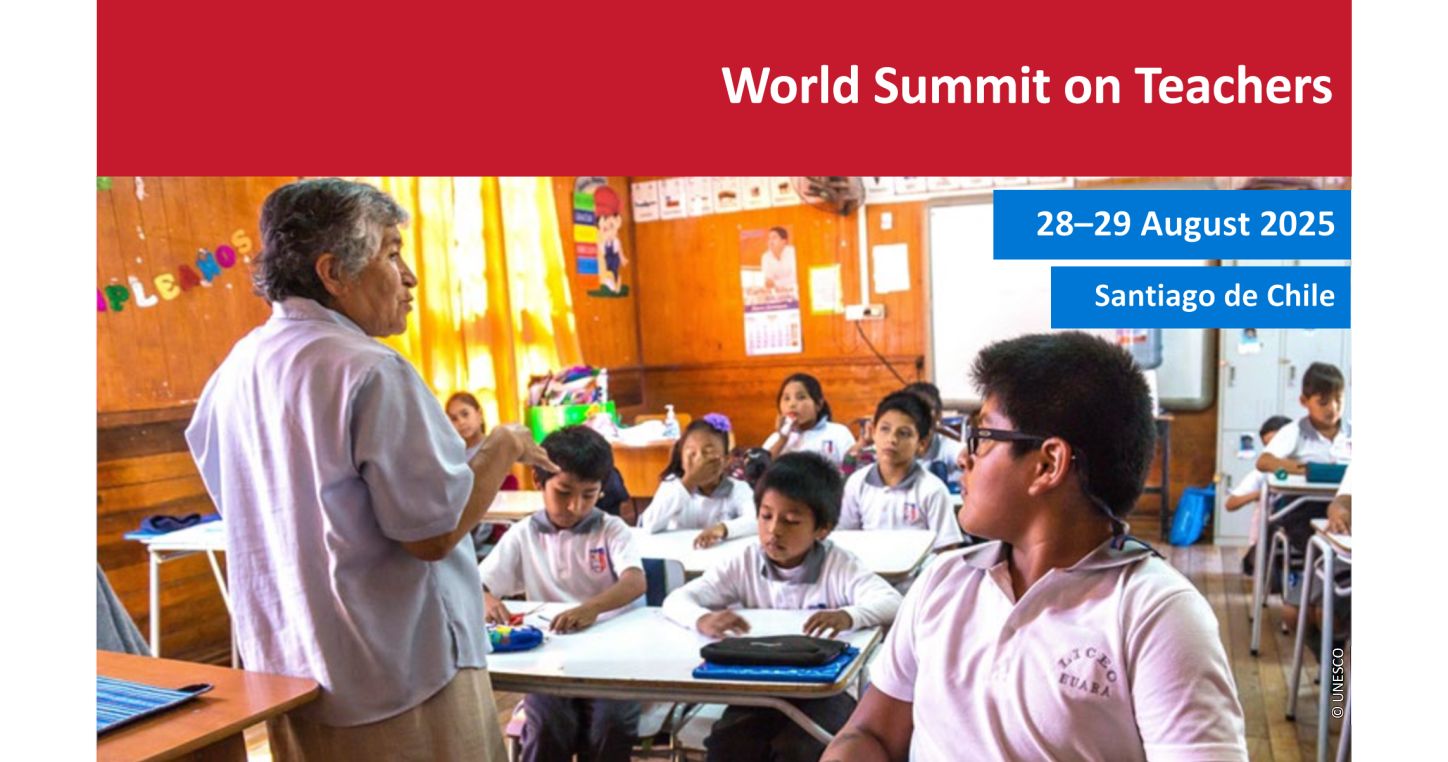
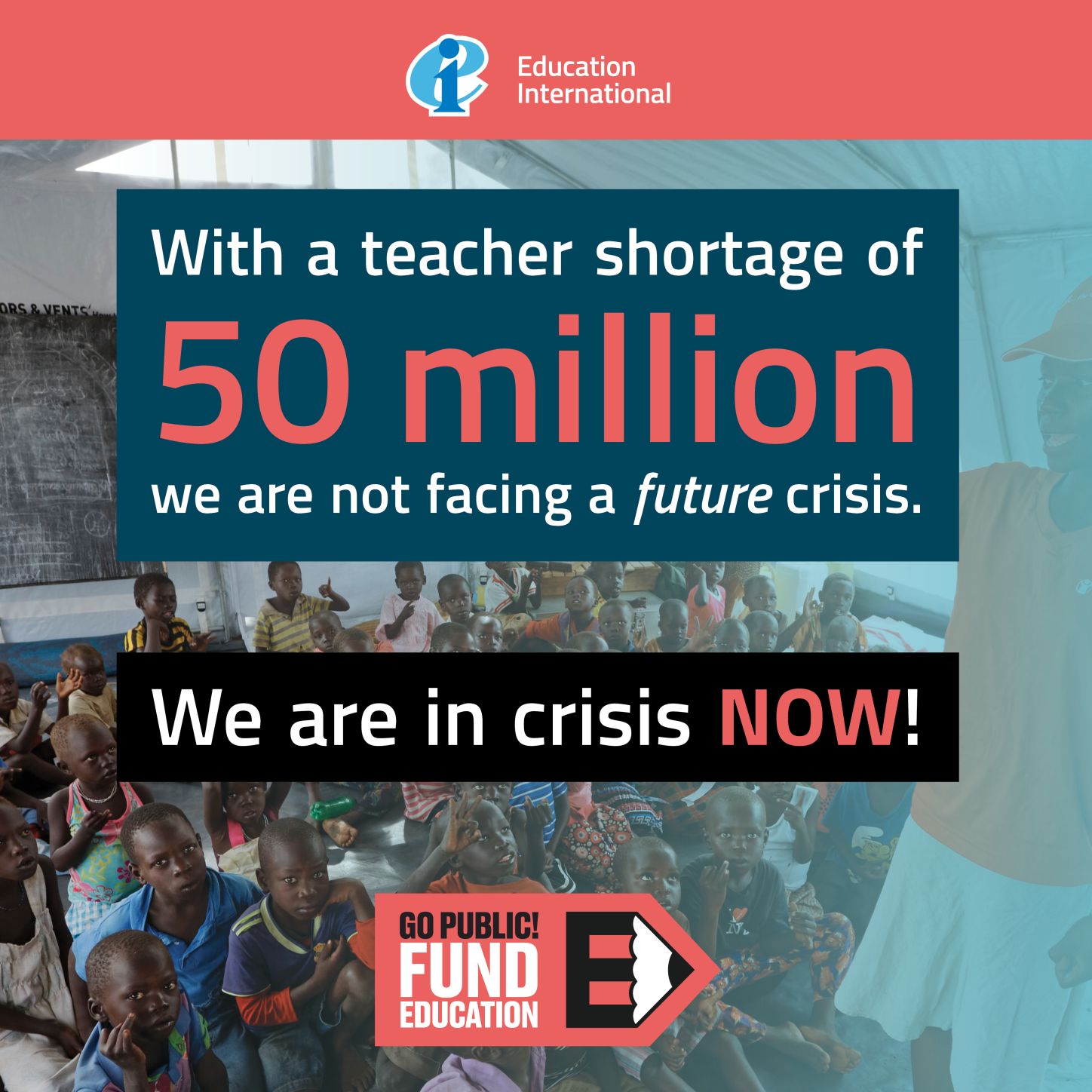
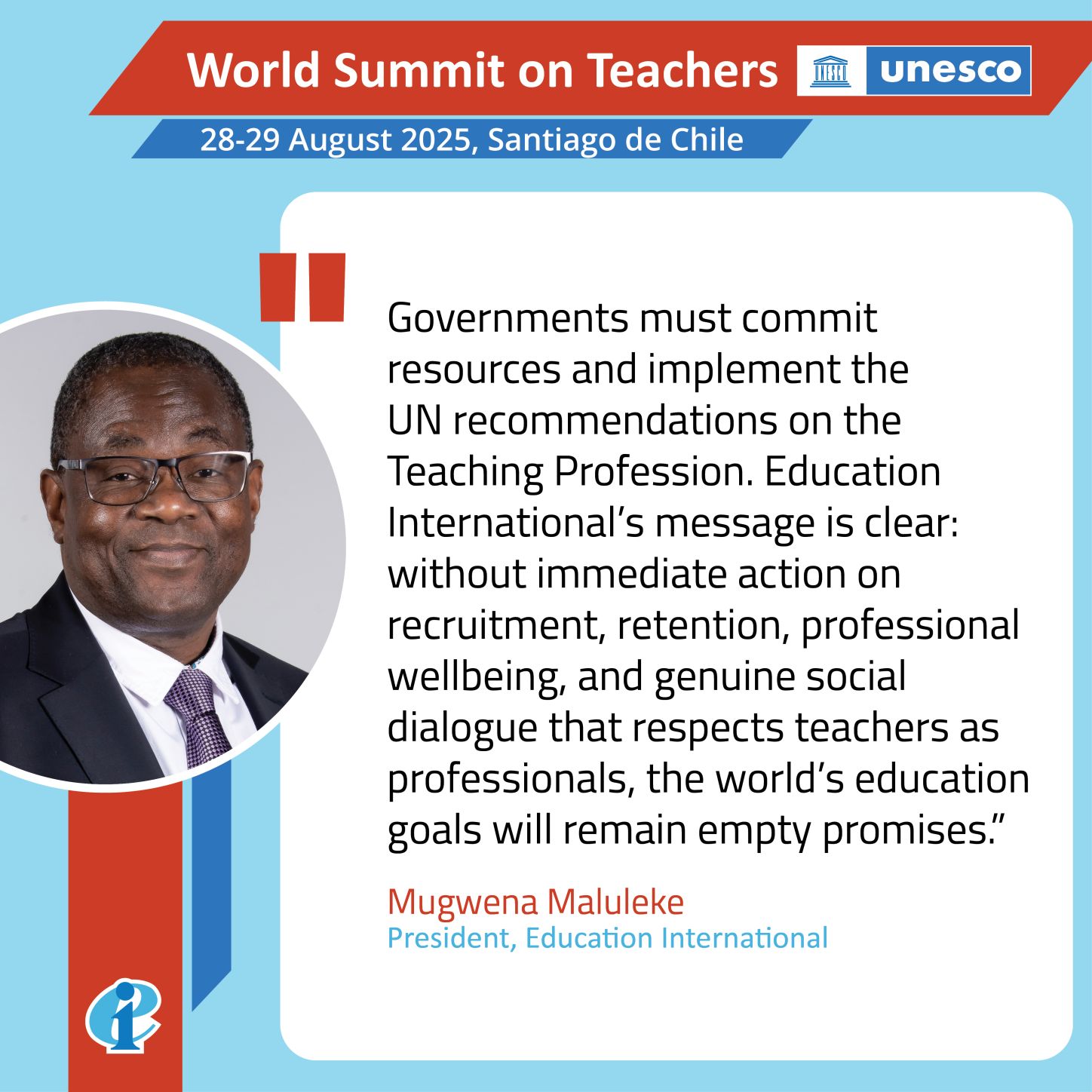
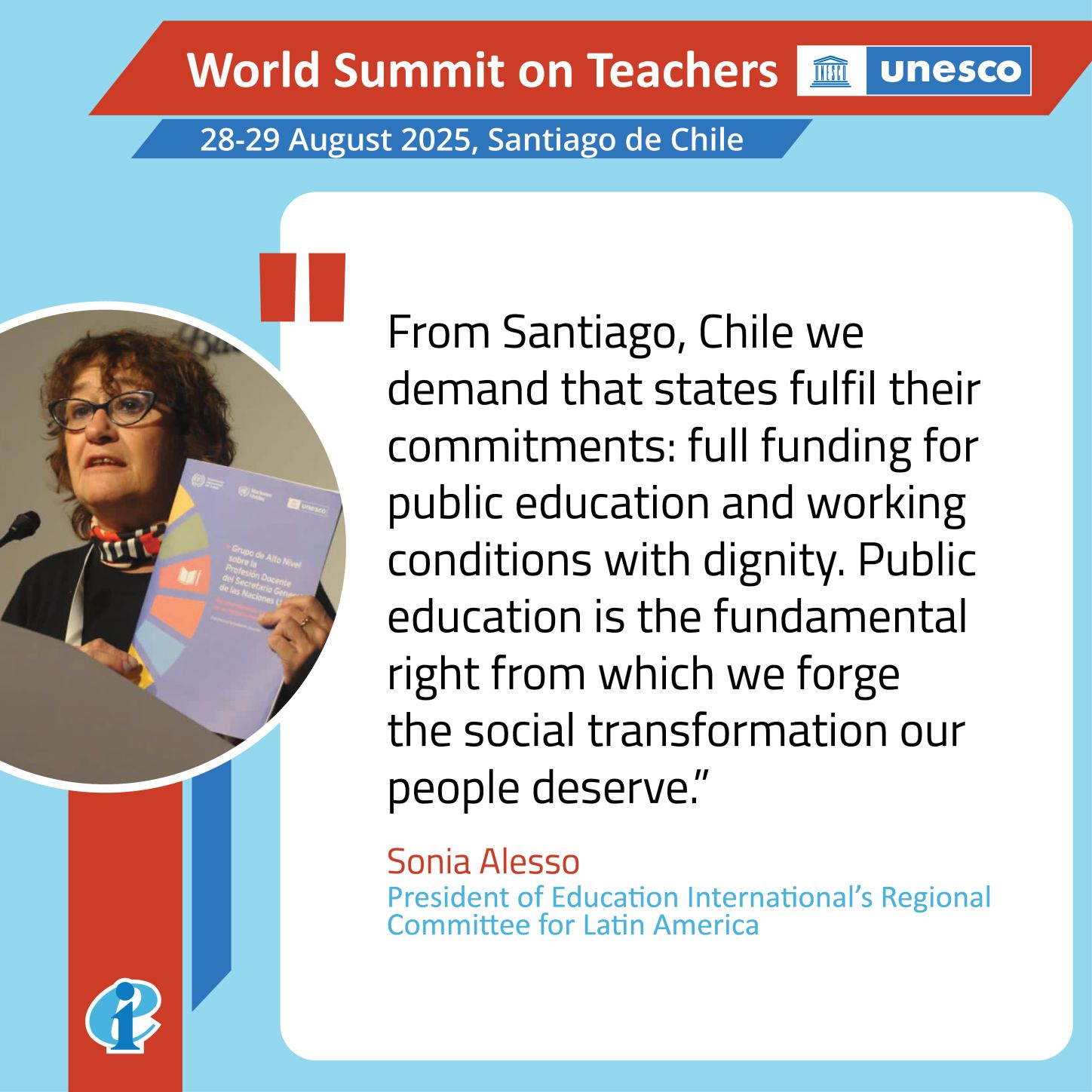
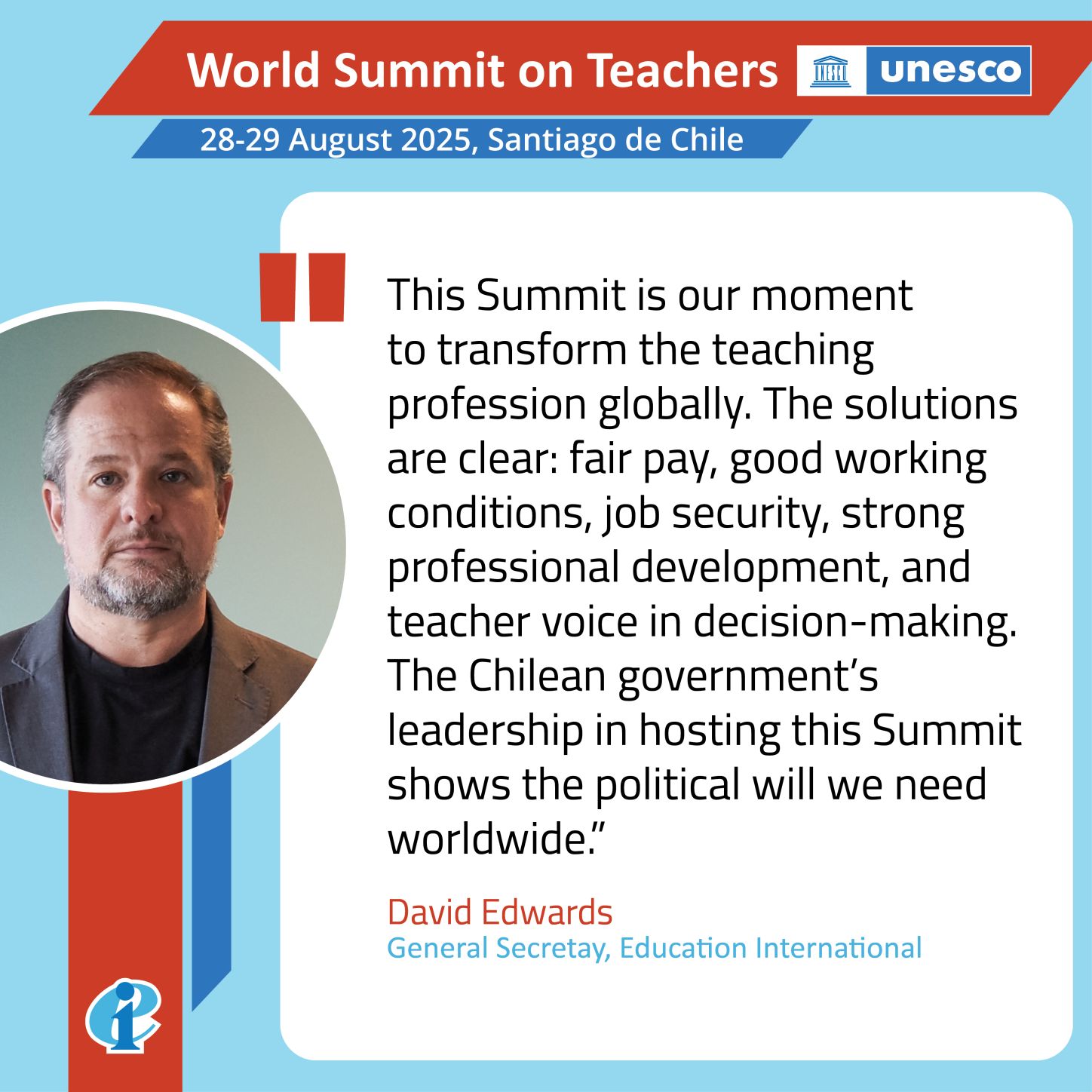
As ministers and education leaders prepare to convene for the World Summit on Teachers (WST) on 28-29 August, the global teaching profession faces an unprecedented recruitment and retention crisis. The world needs 50 million more teachers by 2030 across early childhood, primary and secondary education, yet qualified educators are fleeing classrooms due to systematic government failures.
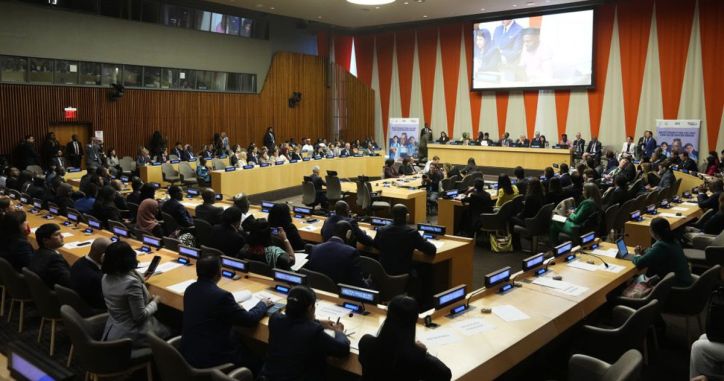
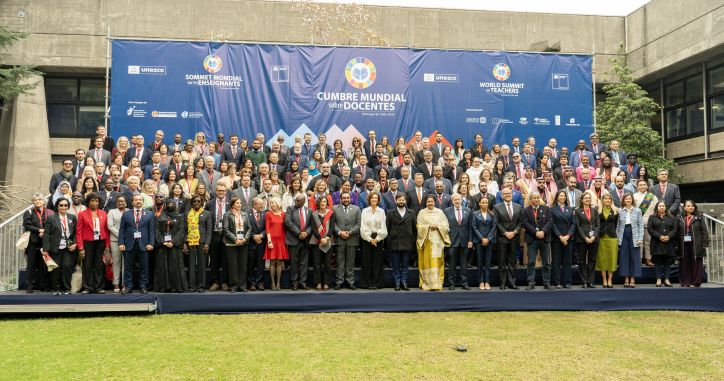
The WST, convened by UNESCO and hosted by the Government of Chile, brings together ministers, UN agencies, teacher unions, civil society organisations and education experts to address the shortage and advance implementation of Sustainable Development Goal 4 - inclusive and equitable quality education for all.
Building on this commitment to transformation, Education International arrives in Santiago with a clear framework for addressing the global teacher shortage that centers on concrete solutions and immediate action.
Teacher voices from across all continents will bring firsthand accounts of public education systems under pressure. Their unified message: structural transformation is essential, not cosmetic fixes.
Post about the Summit
Here are sample messages that you can share on your social media:
📢I am joining colleagues at the UNESCO World Summit on Teachers to call on governments to address the global teacher shortage of 50 million and commit to fully funding public education.
👩🏼🏫👩🏽🏫👩🏿🏫The World Summit on Teachers is an unprecedented opportunity to move from words to action!!! Governments MUST commit to fully funding public education and investing in teachers.
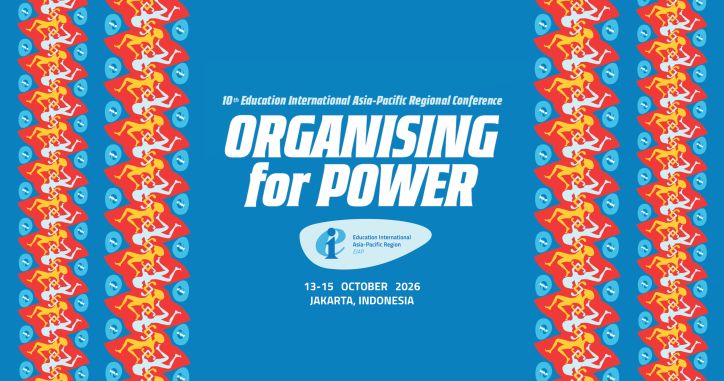
10th Education International Asia-Pacific Regional Conference: Organising for Power
Over 300 education unionists are coming together for the tenth Education International Asia-Pacific Regional Conference on October 13 to 15 in Jakarta, Indonesia.
Portugal: Union takes Go Public! Fund Education to every corner of the country
Through a nationwide caravan spanning more than 2,500 kilometres, Portugal's education union Federação Nacional de Professores (FENPROF) brought Education International's Go Public! Fund Education
campaign directly to schools and communities, mobilising thousands of teachers and citizens around a common message: “If we want quality education for all, we must invest...
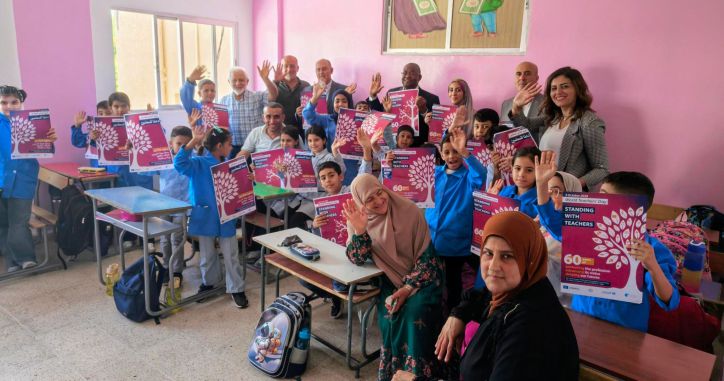
Standing with Teachers: Education International and affiliates’ global call to defend and elevate the profession on World Teachers’ Day
From Lebanon to Eswatini, from Singapore to Canada, educators and their unions marked 5 October with a shared call: invest in teachers, strengthen the profession, and protect the right to education.
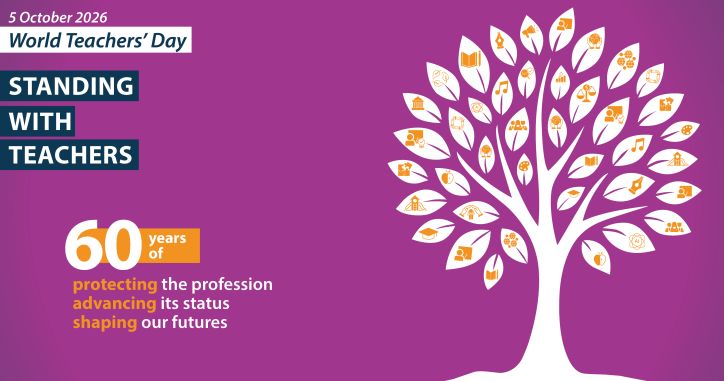
Standing with Teachers: 60 Years of Protecting the Profession, Advancing its Status, and Shaping Our Futures
On 5 October 2026, education unions around the world will celebrate World Teachers’ Day, marking the 60th anniversary of the 1966 International Labour Organization (ILO)/UNESCO Recommendation concerning the Status of Teachers
.
Fighting the commercialisation of education
24 September 2026
Education unions pledge to fight for and lead a new era of education financing
Following the disappointing outcome of the Global Partnership for Education (GPE) replenishment meeting, education union leaders from around the world came together to demand urgent government action. Education International (EI) and its member organisations will intensify pressure on political leaders to fully fund public education and uphold every child’s right...
Achieving Sustainable Development Goal 4
29 August 2025
Historic Santiago Consensus puts teachers at the heart of education transformation
World Summit on Teachers delivers comprehensive framework demanding sustainable investment in teaching profession
Ministers, teacher unions, and education leaders meeting at the World Summit on Teachers in Chile have adopted the Santiago Consensus
, a comprehensive framework that commits governments to address the global shortage of 50 million teachers through concrete policy action.