Elevate, support, and invest in the teaching profession
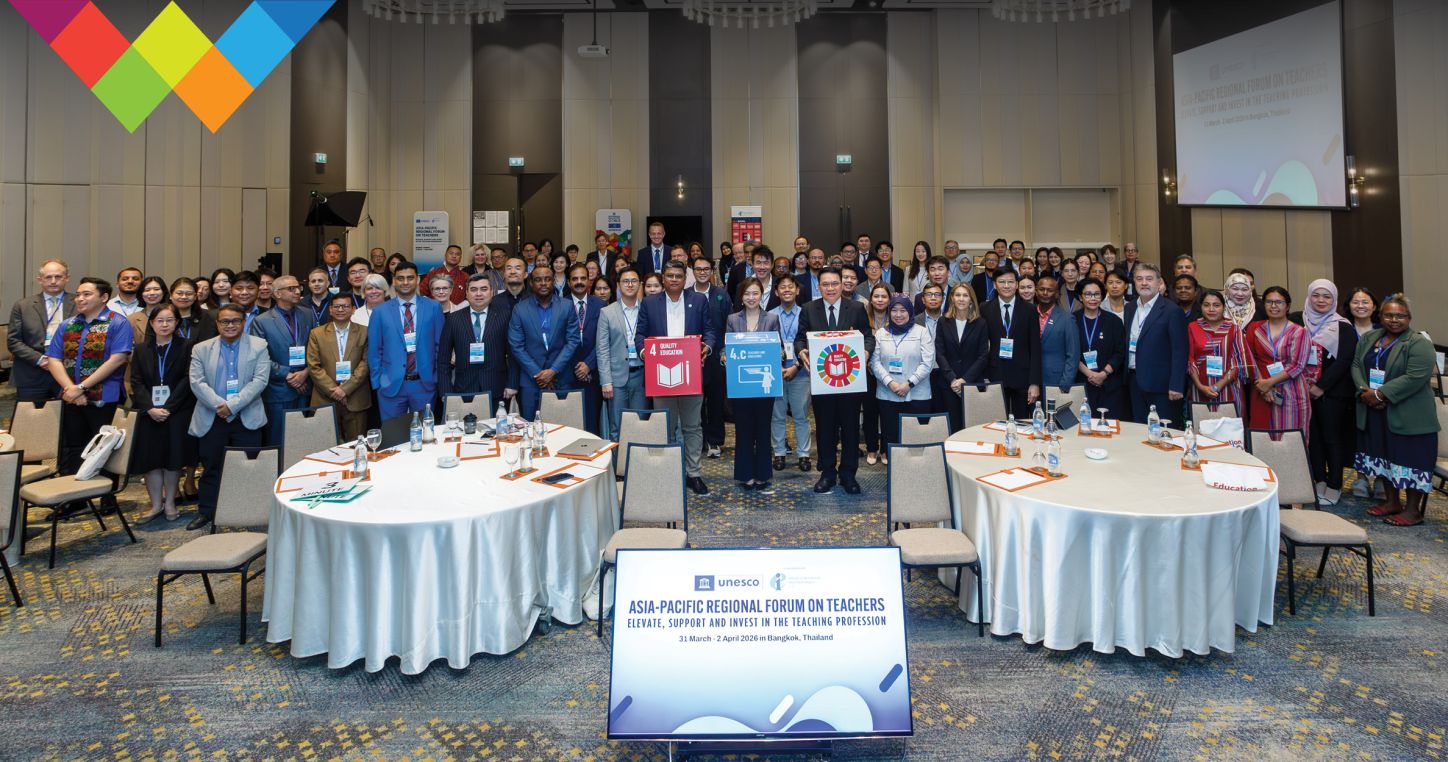
Asia-Pacific Regional Forum on Teachers — Bangkok, 31 March 2026

Sign up
Sign up for the Worlds of Education newsletter.
Sign up
Sign up for the Worlds of Education newsletter.
Thank you for subscribing
Something went wrong
We need 44 million more teachers globally by 2030. In Asia-Pacific alone, that figure is more than 16 million. This is not a projection to worry about later — it is an emergency we are living right now.
There is a crisis unfolding in education across the Asia-Pacific — and it is one of our own making. For years, governments have underfunded schools, allowed teacher salaries to stagnate, and stripped away job security. Now, as the consequences mount, we are scrambling to fill the gap. The answer is not more stopgap measures. The answer is to fundamentally change how we value, invest in, and support the teaching profession.
The Global Education Monitoring Report 2026, launched in Bangkok last Thursday, offers a sobering picture. Some 273 million children and young people — one in six — are out of school. For the seventh consecutive year, that number has risen. The share of qualified primary teachers in our region has fallen from 89 percent in 2013 to 78 percent today. More than half of countries have cut their education funding since 2015. These are not abstract figures. Behind each one is a child who deserves better, and a teacher stretched far beyond what any system should ask.
A profession under siege
What troubles me most is that this crisis is not accidental. It is the predictable consequence of choices of governments that have chronically underfunded education, frozen salaries, and taken away job security. More than half of countries in our region have cut education funding since 2015. And we wonder why fewer young people are choosing to teach, and why so many who do are quietly walking away.
What also troubles me is the culture of exclusion that has taken root in too many education systems. Reforms are designed without consulting teachers. Curricula are changed, assessments overhauled, new technologies rolled out — and teachers are informed after the fact, expected to simply adapt. This is not just disrespectful. It is counterproductive. Policy built without the profession’s voice will always fall short. Institutionalised social dialogue is not a courtesy extended to teachers — it is a precondition for policy that actually works.
And yet, even in these difficult circumstances, teachers continue to demonstrate remarkable commitment and resilience. In 2025 alone, we witnessed coordinated action across the region — in Nepal and Mongolia, in Indonesia, the Republic of Korea, and Australia — where teachers organised and mobilised, including through industrial action, to call for greater investment and recognition. The teacher in Mongolia who walked out did not do so out of self-interest. She did it because she believed collective action could change her government’s mind. And it did. That kind of moral courage deserves not just our admiration, but our solidarity.
A roadmap already exists
The good news is that we do not lack direction. The United Nations High-Level Panel on the Teaching Profession, convened by the Secretary-General in 2024, provides a clear roadmap: fair salaries, decent working conditions, job security, professional autonomy, social protection, and meaningful support for teachers’ well-being. These are not radical demands. They are the basic conditions under which any professional can be expected to thrive.
These recommendations were reinforced by the Santiago Consensus, adopted at the World Summit on Teachers in August 2025, which commits governments to stronger public investment in education, effective teacher policies, and genuine social dialogue. The Asia-Pacific Regional Forum on Teachers, convened in Bangkok this week, is the first regional gathering since both of those landmark moments. That gives us both an opportunity and a responsibility: to move from commitments to implementation, and to do so with urgency and accountability.
What the forum is calling for
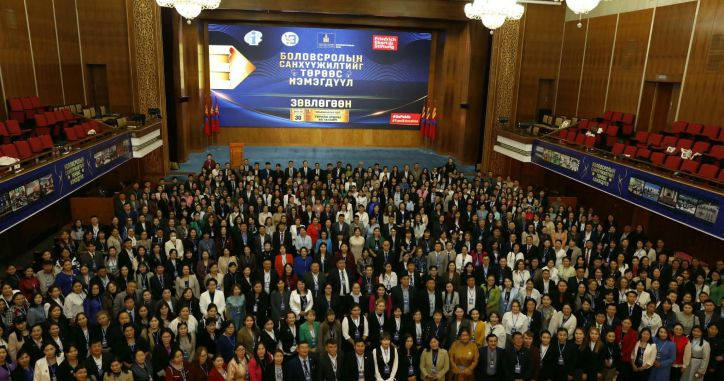
Over three days, more than 100 participants from across the region have come together to shape a stronger, more equitable, future-ready teaching profession. Among the key recommendations emerging from this Forum are:
- Strengthen teacher preparation and career pathways — improving initial teacher education, ensuring quality and relevance, and establishing coherent systems for continuous professional development and career progression, so that teaching remains an attractive and sustainable vocation.
- Improve teacher working conditions and well-being — ensuring competitive compensation, reducing administrative burdens, and making teacher well-being a funded, monitored policy priority — not an afterthought. Teachers who are stretched thin and undervalued cannot give their students what they need.
- Strengthen inclusive, evidence-informed teacher policies aligned with SDG 4.c — addressing quality, equity, and future system needs, including climate readiness and technological change, while urgently prioritising pre-primary education, which remains chronically underserved across the region.
- Improve teacher data systems — aligning indicators with international frameworks, expanding meaningful disaggregation, and closing persistent data gaps, particularly for pre-primary teachers. We cannot fix what we cannot see, and too many teachers remain invisible to the systems that are supposed to support them.
- Institutionalise coherent legal and policy frameworks for teacher education — ensuring alignment across the full career continuum from initial preparation to ongoing professional development, so that no teacher is left behind after their first year in the classroom.
- Expand equitable access to professional development — scaling opportunities for teachers in rural and underserved areas through flexible, relevant, and responsive pathways, supported by mentoring, middle-tier structures, and sustained follow-up that ensure policies translate into real improvements in classroom practice.
These are among the key recommendations, alongside many others spanning digital governance, financing, resilience, inclusion, and the safeguarding of teacher agency in an age of AI. Taken together, they represent a comprehensive call to action, one that must now be answered.
What must change
The path forward is clear, even if it demands political will that has so far been in short supply. Governments must commit to education financing benchmarks by allocating at least 20 percent of public budgets and 6 percent of GDP to education as a bare minimum. They must offer teachers competitive salaries, genuine job security, and the kind of professional development and autonomy that makes a career in teaching both sustainable and rewarding.
Real reform is built with teachers, not imposed on them. Social dialogue is not a bureaucratic formality, it is the mechanism through which policies gain the credibility and trust required to succeed.
When I think about what is at stake, I return to the human faces behind these conversations. The teacher in a remote Philippine island who stays until dark, wondering quietly whether she can afford to remain in the profession she loves. The young person in Vanuatu with the potential to be an extraordinary educator who looks at the working conditions and asks: is it worth it? And consider every child in every classroom who has the right to a qualified, supported, and motivated teacher every lesson, every day.
Teachers are not instruments of policy. They are agents of change. But they can only act as agents of change if they are empowered with decent conditions, job security, professional respect, and genuine social dialogue.
The Santiago Consensus and the UN High-Level Panel recommendations must not become documents on a shelf, nor should the recommendations emerging from the Teacher’s Forum. They must travel back with every delegate, every minister, every union leader into ministries, classrooms, and union halls and become policy enacted, budgets allocated, and conditions improved.
This is the moment to choose investment in teachers, dialogue with teachers, and action taken with teachers. Not another forum, not another declaration but a genuine turning point for the teaching profession, and for the millions of children whose futures depend on it.
The opinions expressed in this blog are those of the author and do not necessarily reflect any official policies or positions of Education International.