PISA communications toolkit for Education International member organisations
Purpose
The release of the OECD's PISA 2025 results on 8 September 2026 will generate significant media attention and political debate worldwide. PISA results are often presented as a ranking of education systems, creating narratives of "winners" and "losers". Education International encourages affiliates to use this moment to challenge simplistic interpretations and shift the conversation towards what truly drives quality education: fully funded public education systems, educational justice, equity, strong social dialogue, professional trust, and respect for teachers and education support personnel.
This toolkit provides suggested advocacy messages, quotes, social media content, and rapid-response materials to help unions shape the debate, defend public education, and advance policy demands following the release of the results.
Core messaging framework
Main message
PISA should be used as a diagnostic tool, not a ranking exercise.
The real question is not which country moved up or down a league table. The real question is whether governments are willing to make the political and financial choices necessary to realise the right to quality public education for every learner. Collaboration not competition is what improves education.
Supporting messages
- Education systems cannot be understood through rankings alone.
- Teachers and education support personnel should not be blamed for policy failures, underfunding, or inequality.
- Poverty, inequality, austerity, and underinvestment shape educational outcomes.
- Strong public education systems require full public funding, not budget cuts, austerity measures, or market-based reforms.
- Educational success is about more than test scores. It includes well-being, inclusion, democratic participation, creativity, and the ability of students and educators to thrive.
- Education policy should be shaped through social dialogue with educators and their unions.
- Every learner has a right to quality public education regardless of income, geography, gender, migration status, disability, language, or background.
- The strongest education systems are those that value educators, respect unions, invest in public education, and support all students.
PISA 2025: The results are in. Now governments must act.
1. Alert to the livestream
PISA 2025 results: Join the global conversation
On 8 September 2026, the OECD will release the PISA 2025 results, covering the experiences and performance of more than 760,000 students across 91 countries and economies.
The results will generate headlines and political debate around the world. Too often, that debate focuses narrowly on rankings. Education unions have a responsibility to bring educators' voices into the conversation and focus attention on the policies, investments, and conditions that students need to succeed.
📍 Watch the launch live: Launch of PISA 2025 Results
📍 Access Education International's analysis and advocacy resources.
Let's ensure the conversation is about educational justice, fully funding public education, valuing educators, and guaranteeing every learner's right to quality education.
2. Social media posts before release
Option 1
The #PISA2025 results are almost here.
But education is not a competition.
Beyond the rankings, we'll be asking:
✅ Are schools fully funded?
✅ Are educators valued and respected?
✅ Is every learner's right to education being fulfilled?
#GoPublic #FundEducation
Option 2
When #PISA2025 is released, don't just ask who is on top.
Ask:
📚 Who is being left behind?
💰 Is education fully funded?
👩🏫 Are educators being trusted and supported?
⚖️ Are governments addressing social injustice?
#FundEducation #PublicEducation
Option 3
The biggest lesson from every PISA cycle is not about rankings.
It's about investment.
Where governments invest in public education, support educators, and address inequality, students are more likely to thrive.
#GoPublic #FundEducation
Option 4
PISA can tell us a lot.
What it cannot tell us is everything that matters.
Education is more than test scores.
It's creativity. Inclusion. Democracy. Well-being. Human rights.
#PISA2025
3. Release Day Messages
Post 1
Today the #PISA2025 results are released.
Rankings make headlines.
But rankings don't improve education.
Fully funded public education, strong social dialogue, educational justice, and respect for educators do.
#GoPublic #FundEducation
Post 2
A country's position in a ranking tells only part of the story.
Inequality.
Class sizes.
Teacher shortages.
School funding.
Student well-being.
These realities shape educational outcomes every day.
Post 3
The response to disappointing results should never be more blame, more testing, or more privatisation.
The response should be greater public investment, stronger support for educators, and policies that advance educational justice.
#PISA2025
4. Myth vs Reality (suggested IG carrousel)
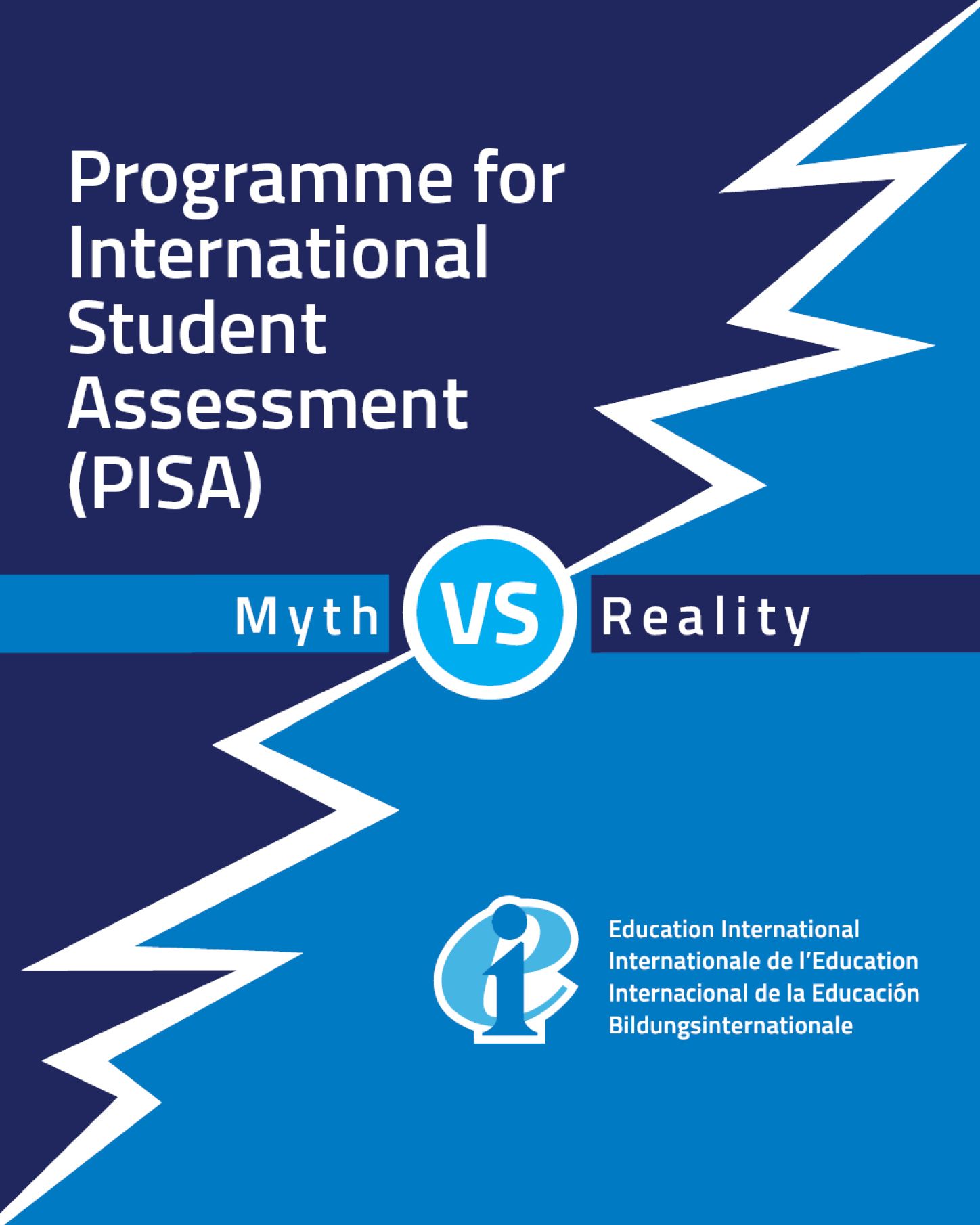
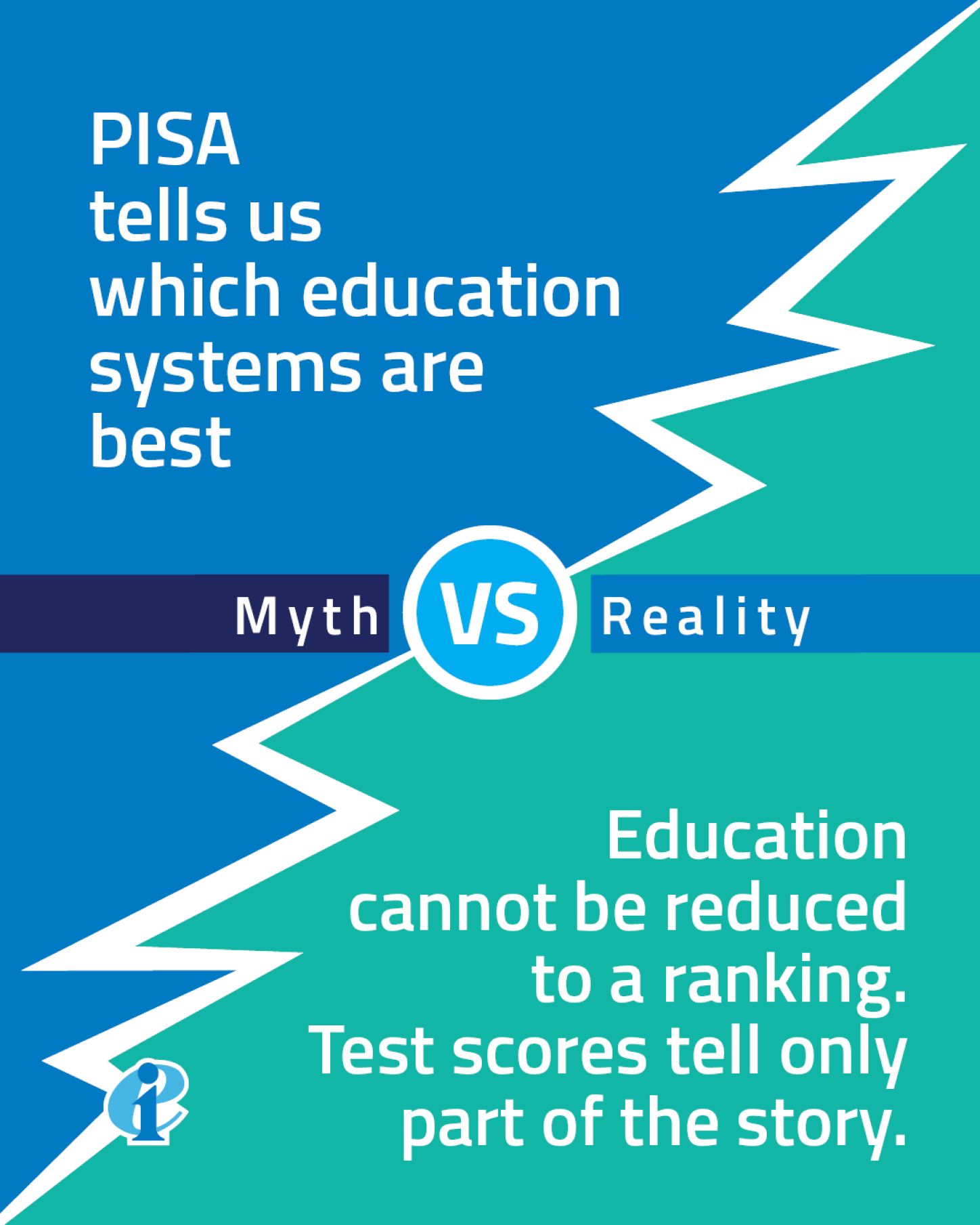
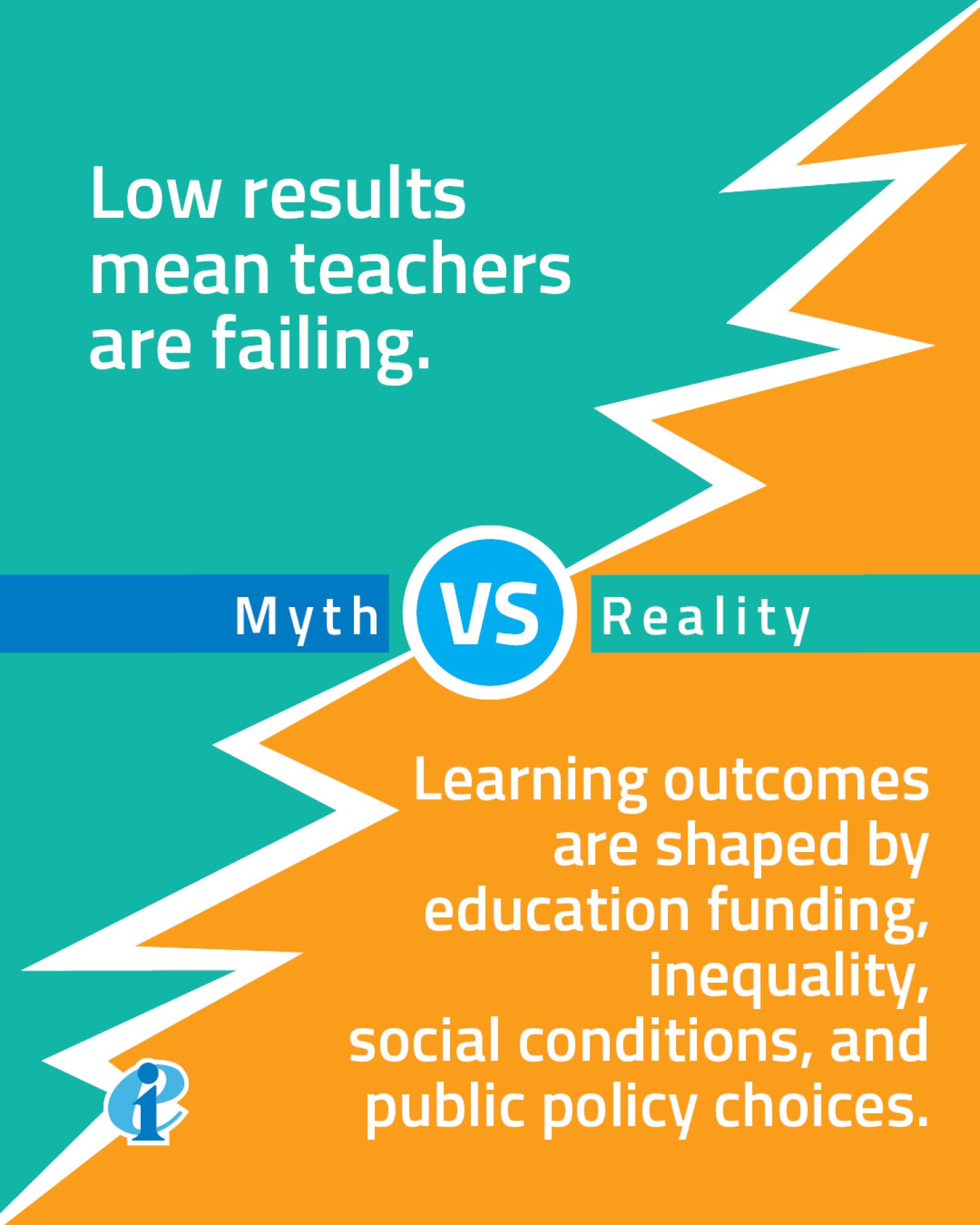
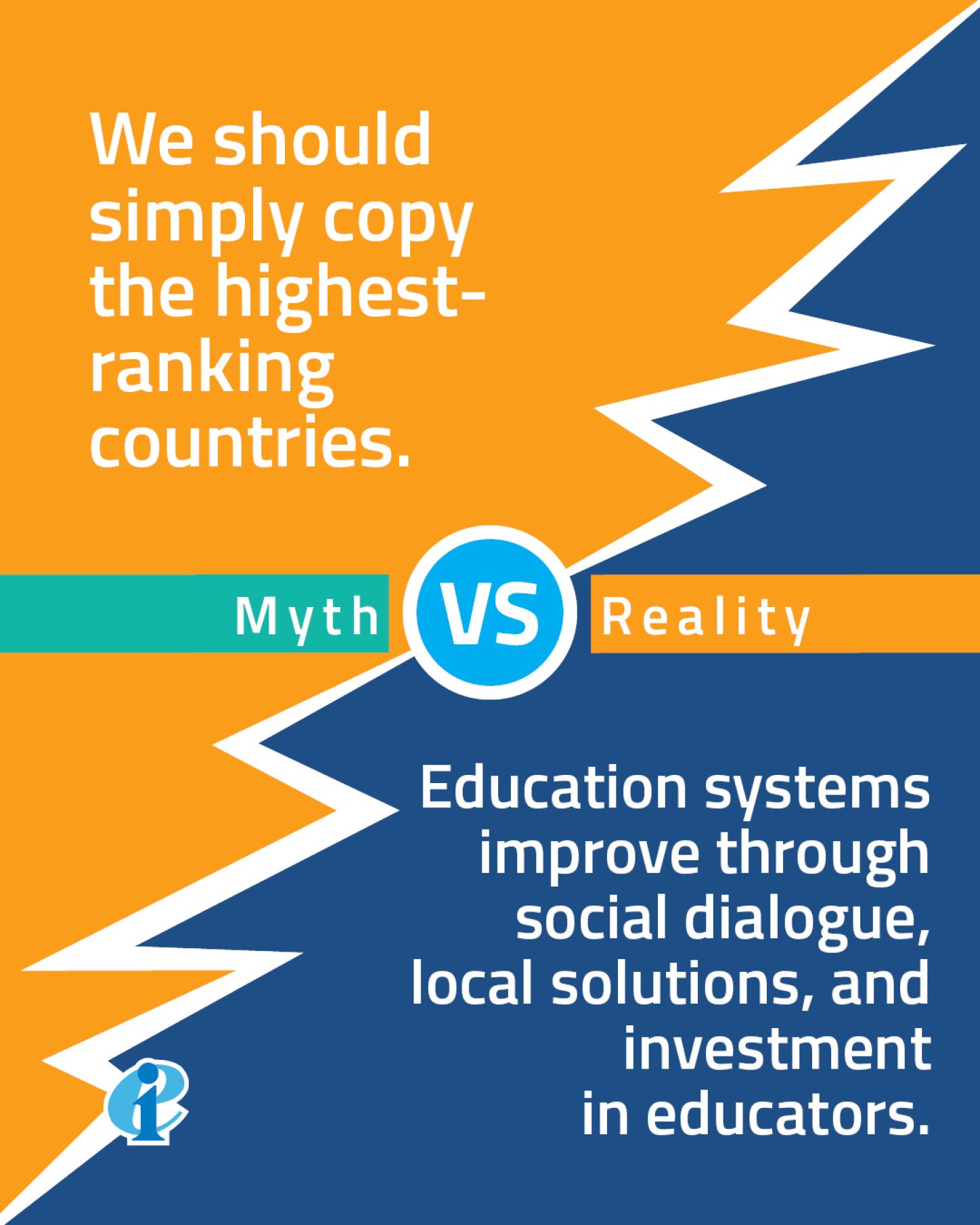
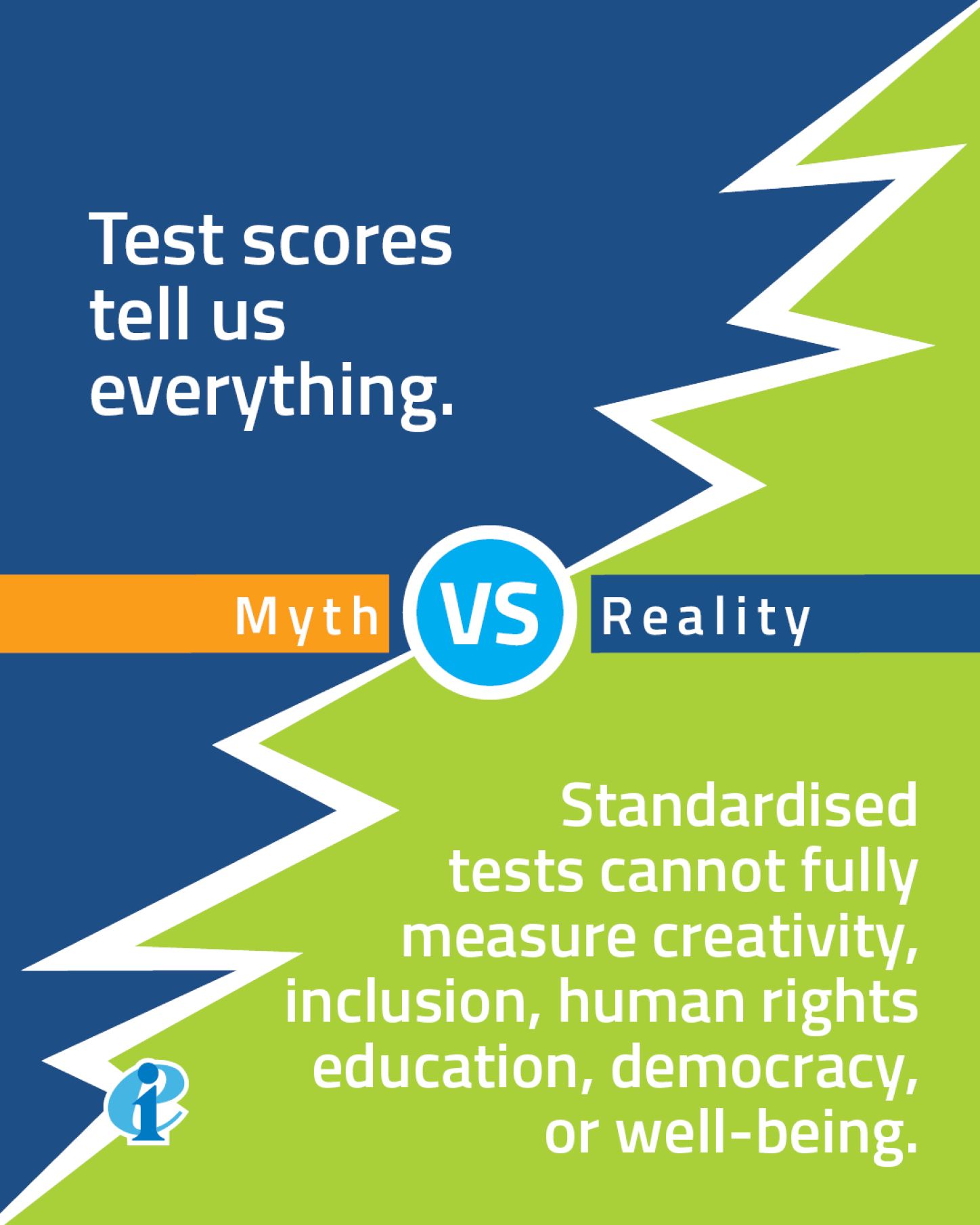
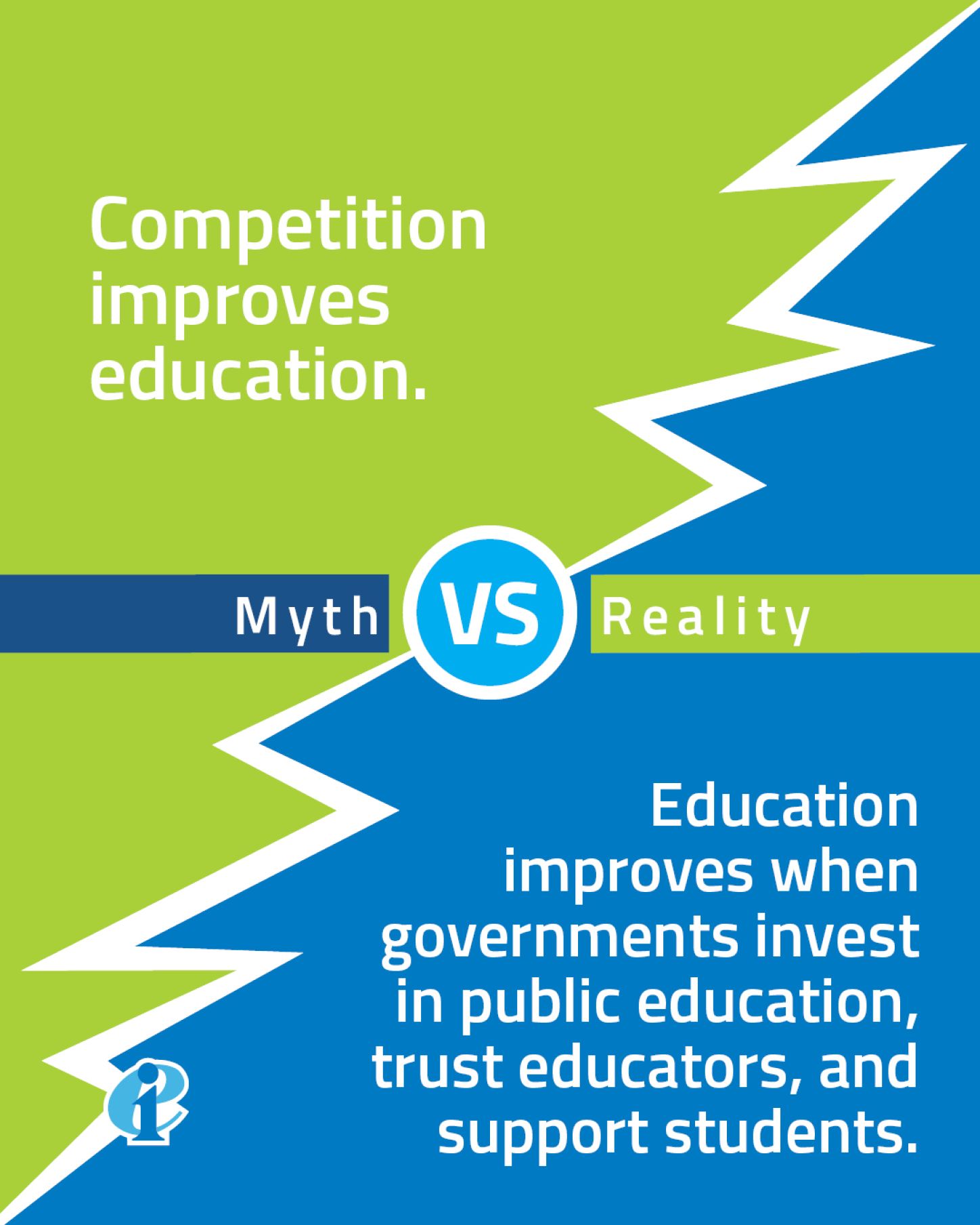
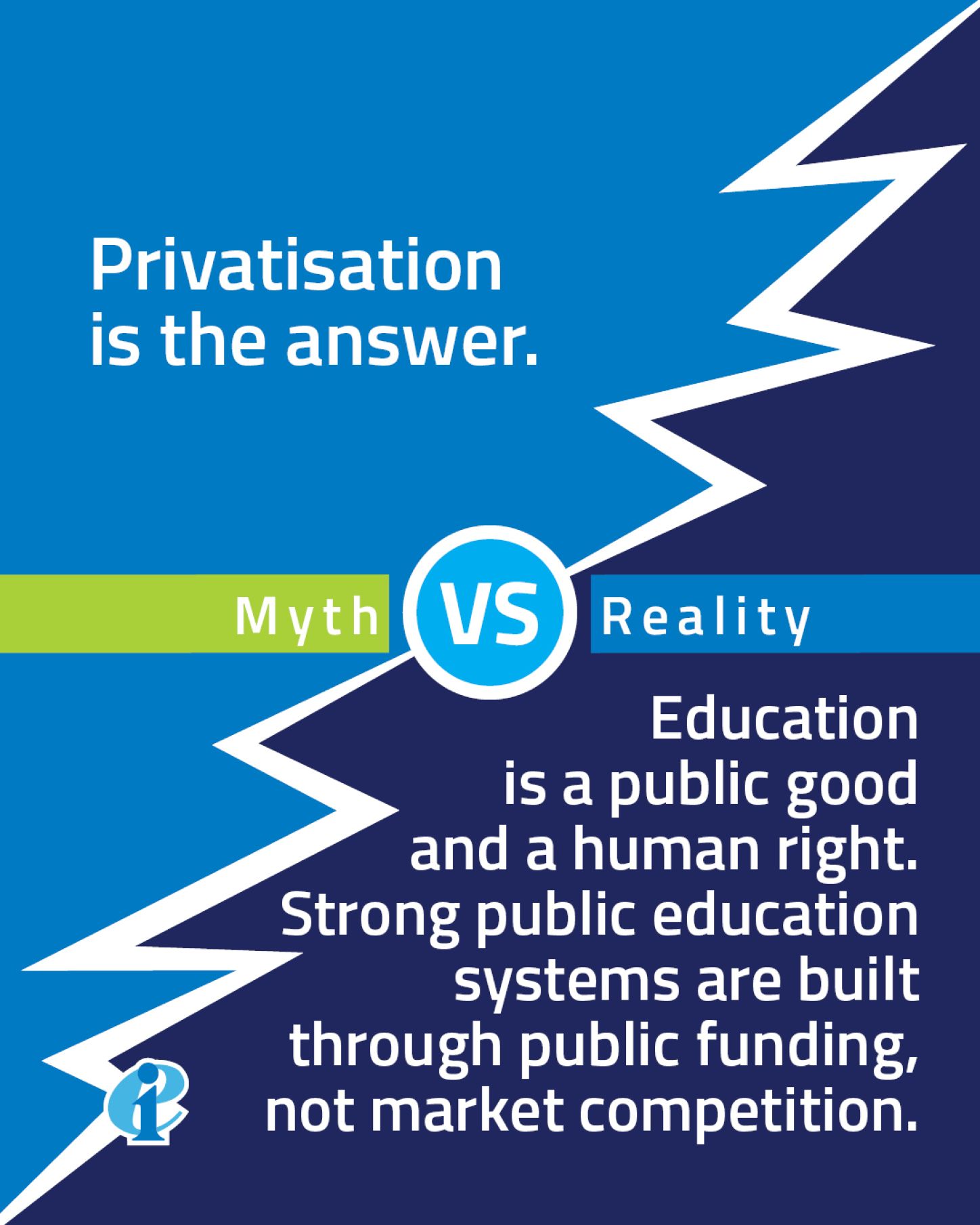
Shareable social version
10 things unions should know about PISA
- PISA measures reading, mathematics, and science among 15-year-olds.
- PISA provides useful information, but it does not tell the whole story about education.
- Rankings dominate headlines, but they often hide deeper realities.
- Poverty, inequality, social conflict, strongly affect educational outcomes.
- Teachers and education support personnel should never be scapegoated for political failures.
- Education is about far more than test scores. Creativity, inclusion, democracy, and well-being matter too.
- Strong public education systems are built through public investment, not austerity.
- Public education works best when educators and their unions have a meaningful voice in shaping policy.
- Student and teacher well-being are the heart of strong education systems.
- Every learner has a right to quality public education.
Suggested leader quotes
"The value of PISA is not in identifying winners and losers. Its value lies in helping us understand what students and educators need to thrive. The evidence consistently points to the same conclusion: strong public education systems are built through full public funding, educational justice, trust in educators, and a commitment to equity."
If results don't show improvement
"When results fall short of expectations, governments must stop blaming educators and start confronting the real challenges: underfunding, inequality, privatisation, and the chronic neglect of public education. If we want different results, we need different political choices."
If results improve
"When progress is visible, the credit belongs to educators, education support personnel, students, families, and communities. Improvement is the result of sustained investment, professional commitment, and strong public education systems."
On rankings
"Education is not a World Cup. Students are not competitors and teachers are not coaches chasing a medal or trying to eliminate opponents. Rankings create headlines, but they do not tell us how to realise the right to quality education for every learner."
On public education
"The strongest education systems are not those that treat education as a market. They are the systems that recognise education as a public good, fully fund it, and value the people who make it possible."
On inequality
"The most important question is not who came first. The most important question is whether every child, regardless of wealth, geography, gender, disability, language, or migration status, has access to quality public education."
Rapid response messages
If government blames teachers
"Teachers and education support personnel are not responsible for underfunding, inequality, staff shortages, austerity, or political neglect. Educational improvement begins when governments invest in the conditions that support teaching and learning.”
If government pushes for more testing
“More testing will not solve the challenges identified by PISA. Governments should focus on full funding, smaller class sizes, stronger support services, fair salaries, dignified working conditions, and improved learning environments.”
If government uses results to promote privatisation
"PISA results should never be used to justify privatisation, vouchers, or the commercialization of education. Education is a human right and a public good. The answer to educational challenges is stronger public education, not turning it over to profit making corporations.”
If government announces austerity measures
"No education system has ever improved by cutting the resources needed for teaching and learning. If governments are serious about educational success, they must fully fund public education and invest in the people who make it possible.”
Sample closing statement
"PISA should be the beginning of a conversation, not the end of one. The real question is not who moved up or down a ranking. The real question is whether governments are willing to make the political and financial choices necessary to realise the right to quality public education for every learner. This means fully funding education, valuing educators, strengthening social dialogue, and tackling the inequalities that continue to shape educational opportunities around the world.”