International trade union cooperation improving early childhood education in Benin and Togo
Teachers and school leaders from Benin and Togo took part in first-ever inter-union training dedicated to early childhood education. The project highlights the power of international trade union cooperation at the service of quality, public, early childhood education.
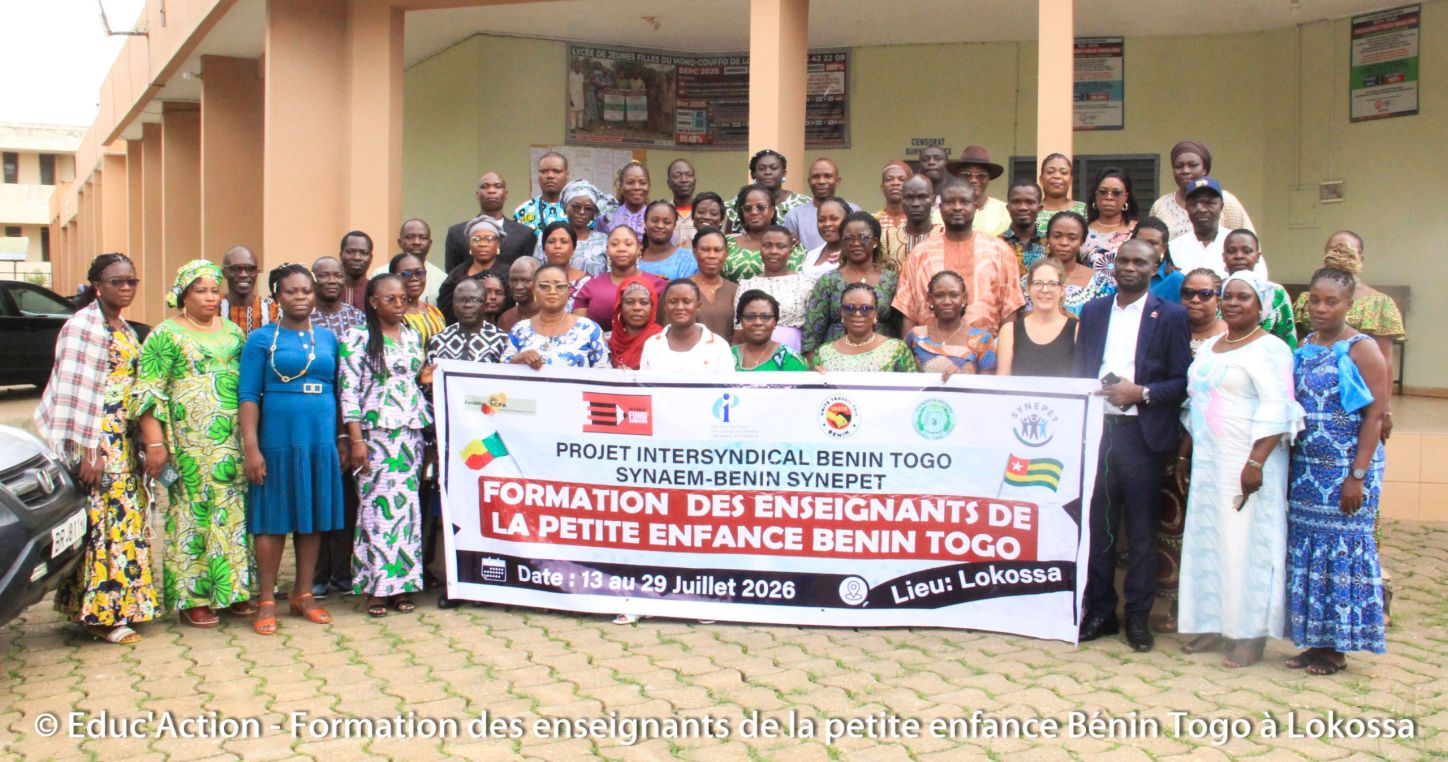
From 13 to 29 July 2026, forty early childhood teachers, twenty from Benin and twenty from Togo, took part in this training course, in Lokossa, Benin, organised by the national unions representing early childhood teachers, SYNAEM-Benin and SYNEPET-Togo. The training was supported by the Swiss foundation Coopération Pédagogique en Afrique (CPA) and received financial backing from the SER union representing teachers in French-speaking Switzerland.
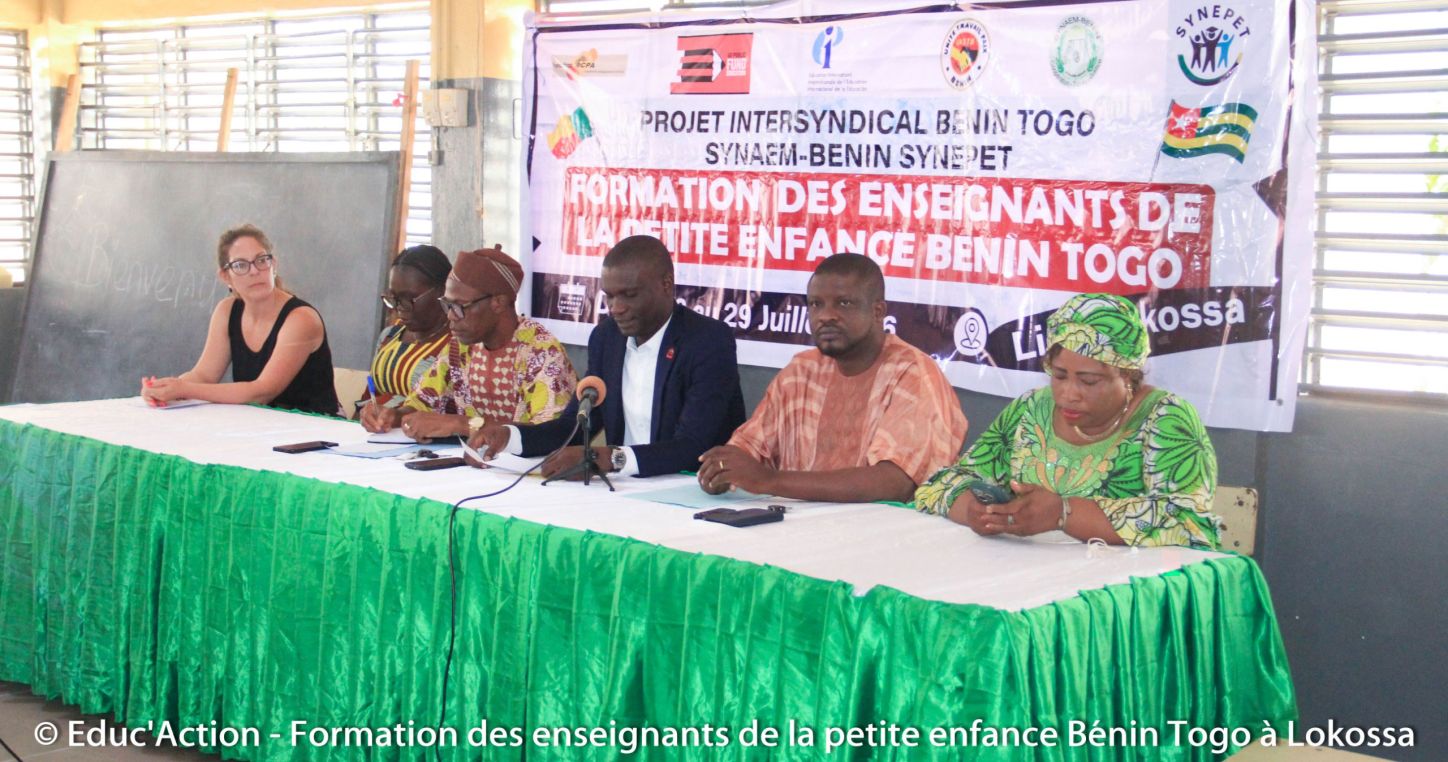
The initiative has created a framework for cooperation between two trade unions from neighbouring countries, focused on the shared goal of ensuring that early childhood education receives the recognition, resources, and teaching practices it deserves.
“The aim is to share experiences and see how early childhood education unions are able to communicate, because we are the poor relations of the education system,” explains the SYNAEM’s General Secretary, Gaëtan Kponoukon.
International trade union cooperation does not involve exporting one country’s education model to another, but is based, rather, on the firm belief that education professionals are the best placed to identify their own needs, develop solutions tailored to their context, and build on them over time.
David Rey, President of the SER, is convinced that greater value needs to be placed on the knowledge that comes from the ground, and that those building this knowledge should have the opportunity to share it with their colleagues across borders.
“This is the approach that the SER champions through its work with the CPA and its membership of Education International: placing professional expertise and collective efforts at the centre of transforming education, while leaving the local actors in control of their own path.”
Training born out of trade union links and shared needs
The project was developed gradually, building on contacts between trade unionists from Benin, Togo, and Switzerland. Kponoukon recalls that the SYNAEM embarked on the idea during the Education International Congress in Bangkok and followed up on it through exchanges with the Swiss partners already active in the region. The idea of launching a project focused exclusively on early childhood education finally materialised following an initial observation visit to Togo and training for trainers from education trade unions.
“Initially, it only involved the SYNAEM, but we thought: ‘What if we asked our friends in Togo to join us in this project?’,” recounts Gaëtan Kponoukon. This decision gave rise to a cross-border initiative: the Beninese and Togolese teams worked together to design a programme, under the supervision of the SER/CPA, taking on board local circumstances.
For Scholastique Tchagbele, General Secretary of the SYNEPET and Secretary for Equity and Gender at Togo’s Federation of National Education Trade Unions (FESEN), the benefits of this cooperation were clear: “When it is for the good of educators, there’s no issue, we’ll work together. These are neighbouring countries and we share a common history.”
Early childhood at the heart of the fight for quality public education
In many education systems, early childhood education remains underfunded, undervalued, and all too often placed on the lowest rung of the ladder in the education hierarchy. The training in Lokossa explicitly sought to reverse this trend by placing early childhood teachers at the centre of their own professional development. The course covered topics such as the design of teaching materials, active learning approaches, teaching strategies, the use of local resources, adapting content to the child’s age, and play-based learning practices.
For Tchagbele, the training focused on very practical aspects of teaching: “We placed emphasis on making the most of local resources and adapting teaching content to the children’s age, without discrimination.”
She also pointed to the inclusion of training on emotional intelligence, storytelling, physical exercise in the form of games, and transition activities within the school day.
Placing emphasis on the Kamishibai technique, she explained: “You write a text and illustrate it. The picture that comes first is described in the last text. So, you show the picture, but you read, on the back, the last text you have, then go to the next page, and so on. When you read, the children listen to you and look at the picture. They pay very close attention. Then you remove the picture, put it to the back, and read the text. If you have five pictures, the text for the first picture appears on the fifth picture, and so on until you’ve finished reading.”
Regarding the creation of texts, she noted that “the trainees actually created texts, enabling them to write their own picture books”.
Active teaching practices, developed with teachers
The approach went beyond the purely theoretical. During the second week, despite it being the summer school holidays, nursery school children visited the training venue to enable the trainees to put the activities prepared into practice, under conditions akin to those of a real classroom. As Kponoukon emphasised: “These are not theoretical courses. There were sessions where the children were present despite it being the school holidays. They came to spend a couple of hours in the workshops so that the teachers could practise with them, just as they would in an actual classroom.”
The participants also made educational materials using items available in their surroundings: leaves, plants, trees, objects found in the local environment. For Kponoukon, this approach opened the door to “having practical materials made by the teachers, with objects sourced from the local environment”.
Tchagbele, for her part, was particularly struck by the emotional intelligence and Kamishibai components of the training. “What I found most interesting was the emotional intelligence aspect. I didn’t realise how my own emotional intelligence could impact on children,” she explains. On the subject of Kamishibai, she added: “I didn’t realise how practical it was for very young children.”
The training also introduced the “triad” model, a training support technique in which teachers analyse their own practices based on questions posed by peers or supervisors. Tchagbele described this method as a way of helping teachers “to understand their mistakes” without top-down criticism, by encouraging them to identify, for themselves, what they can improve.
International cooperation that is clear-sighted, solidarity-based, and under threat
On the Swiss side, the partners are open about both their commitment and the financial difficulties that weigh on the future of such initiatives. Josy Stolz of the SER explains that while her union agreed to provide specific financial support for this training project involving early childhood education teachers, the future remains uncertain in terms of funding, and there is no guarantee, as yet, that this type of training will be offered again in the years to come.
She also pointed out that international trade union solidarity cannot rest solely on one-off commitments and ever-more-limited resources.
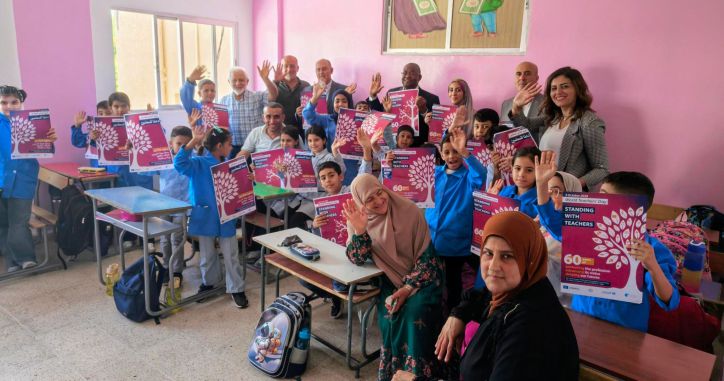
While this is by no means the CPA’s first year of cooperation (having just celebrated 60 years of continuing professional development activities in teaching), it is currently going through a difficult financial period and is unable to launch new projects for lack of sufficient resources.
The organisation did, however, point out that the Benin project had been able to go ahead thanks to the support pledged: “As for the Benin project, I think we’ll be able to find the money, because our donor is backing us for this particular project,” explained Ingrid Crausaz, the CPA representative present for the training.
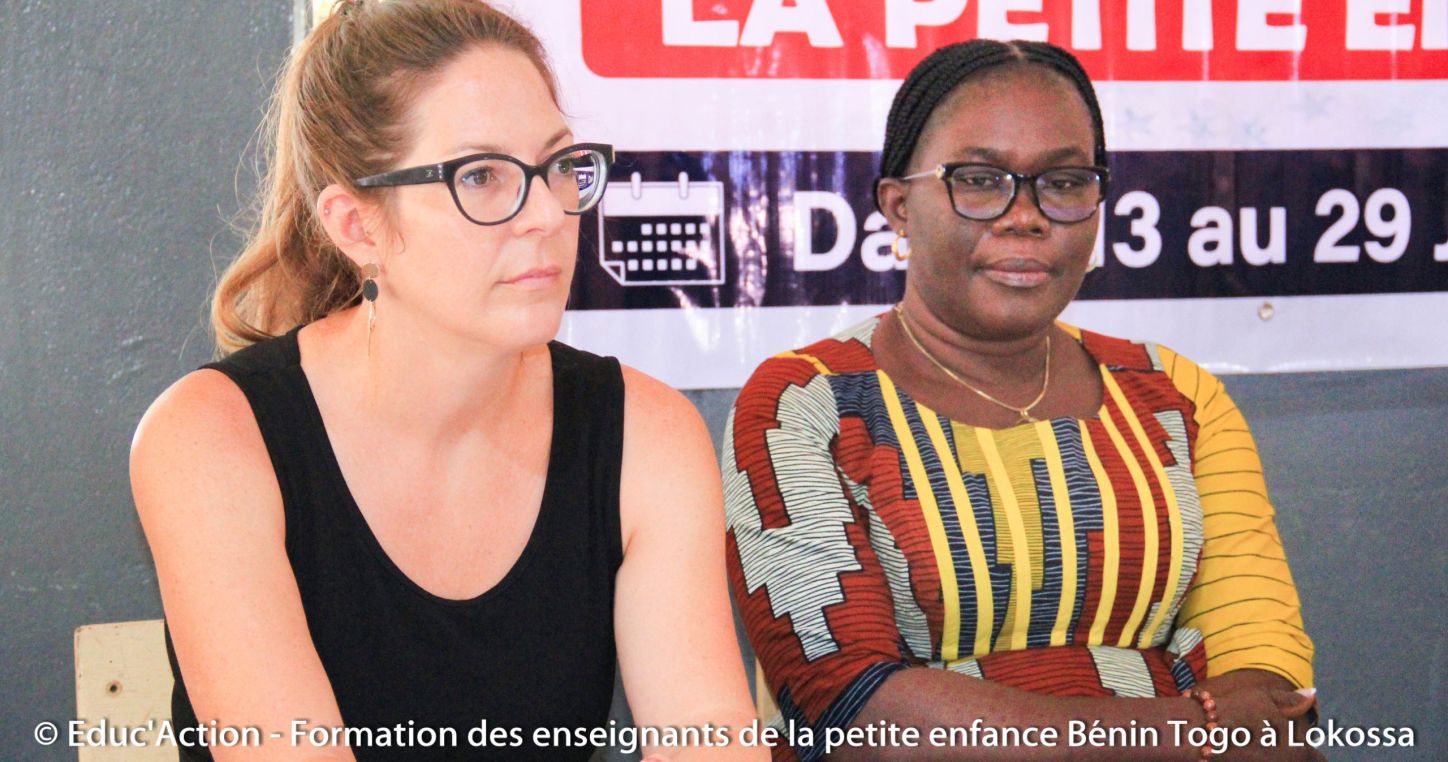
For her, this first experience confirmed the commitment of the local teams. “For a first go, it was a great experience,” she says. She added that the partners “are really enthusiastic” and “would really like the funding to continue”.
What was novel about this training course was that it was aimed exclusively at nursery school teachers. Until now, primary and early childhood teachers would take part in the same course, with specific attention paid to the particular characteristics of each educational level.
Bringing together the two countries and trade unions in a single ongoing training course responded to the CPA’s wishes. This criterion had been put forward by the CPA and the donor organisations, the SER and Valais Solidaire, which receives funding from the Swiss Agency for Development and Cooperation.
Combining the two unions also lowered the CPA’s costs, with fewer Swiss volunteers having to travel.
Unions that train, follow up, and advocate
One of the key outcomes of the training course is the establishment of a follow-up programme. The trainees will continue to communicate remotely, through a WhatsApp group, and classroom visits are planned to see how the methods they have learnt are being put into practice. Kponoukon explains that a monitoring committee has been set up to observe the teaching practices in classrooms around the country and compile a report to be shared with the CPA.
“We will be looking at whether the experience gained has genuinely benefited the children and whether the teachers have improved on their practices,” he explains.
This follow-up will also help to identify the requirements for the next stages and ensure the training is sustained over time.
Similarly, in Togo, Tchagbele emphasised the importance of monitoring and scaling up the initiative: “We’ll go and see if they’re putting this into practice in their classrooms. Supervisors will visit them. They’re going to exchange with each other,” she explains. She also plans to lobby the country’s relevant public authorities: “Together with our partner, we’ve trained around twenty teachers. And how about you? Couldn’t you do the same thing on a national scale?”
In her view, the next step must be to share the experience with the authorities, inspectors, colleagues and the regions, so that these practices are not confined to the forty participants on the course. “We plan to scale up this training,” she says. “If we can find a bit of funding, we can do it internally.”
Stolz of the SER in Switzerland shares their outlook: “This monitoring during the school year is important. If trainers can visit the trainees on site, that’s the best approach. It also helps to identify needs for the following year and see what’s working, and what needs to be reviewed or corrected.”
Strengthening the profession, strengthening the union
This training programme is also a key initiative for the trade union movement. By providing teachers with practical tools to improve their teaching, the unions are demonstrating their social and professional value at a time when trade union action is under pressure.
As Kponoukon makes clear: “What we’re doing is interesting, and it will help broaden the base of union membership in the early childhood education sector.”
He adds that the project is restoring hope at a difficult time for the trade union movement in Benin: “We are once again giving people hope that the trade union is not dead and can be of use to the community.”
This perspective ties in with Education International’s Go Public! Fund Education campaign, which the SYNAEM has incorporated into its communications and materials. Launched in 2023, the campaign is an urgent call for governments to invest in public education, a fundamental human right and public good, and to invest more in teachers, the single most important factor in achieving quality education.
For the trade unions, providing training does not mean stepping in for the state, but demonstrating what is possible, building professional solidarity, and then calling for public policies capable of scaling up these achievements. In the case of Benin, Kponoukon notes that early childhood education has been given specific attention in a decree on the organisation of the Ministry of Early Childhood and Primary Education, a development he attributes to the impact of trade union advocacy.
Looking further, learning together
The training course held in Lokossa also demonstrated the potential of cooperation that connects trade unions, teachers, practices and neighbouring realities. “We have a vision of going far, of getting African trade unions to work together,” says Kponoukon. “Otherwise, we’re right next to one another but we don’t know each other, we don’t talk to one another, and everyone stays in their own corner.”
In a global context where public education is suffering from underfunding and early childhood education remains severely neglected, the cooperation between the SYNAEM and the SYNEPET, facilitated by the CPA and the SER, demonstrates that trade unions can build bridges, generate knowledge and champion another vision of teacher training.
Education International also emphasises the fact that the United Nations recommendations on the teaching profession are equally applicable to early childhood education.
To find out more about Education International’s work on early childhood education, visit the dedicated page on our website.